
If you’re a retail trader, you’re up against institutional traders who pay thousands for high-frequency data feeds and proprietary AI research. These days, however, a growing number of retail traders are levelling the playing field with AI tools that are accessible and customizable, even for those of us whose last coding project was a Flash website circa 2003.
Don’t fall for the hype, though – these AI tools won’t turn you into a one-person hedge fund. What they can do is help remove emotion from your decision-making, and while Canada’s big banks are still figuring out what AI even means for them, that’s a meaningful advantage.
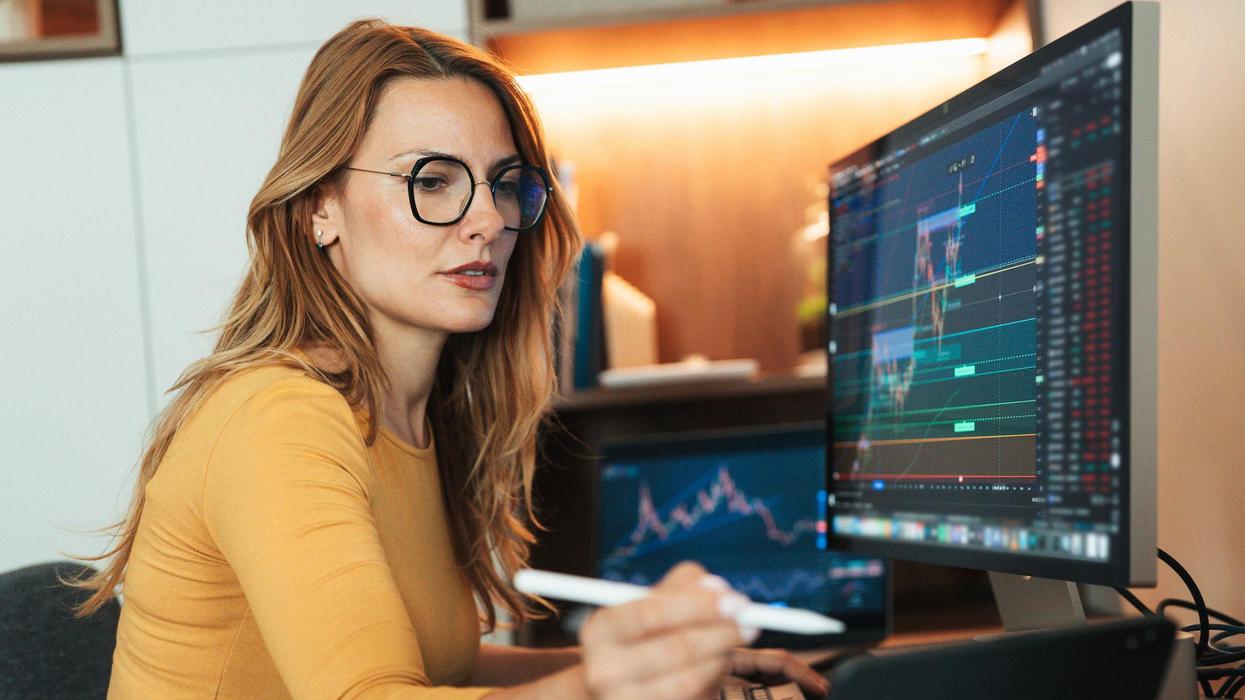
Cameron Smears, a stay-at-home father of two in Toronto, uses AI tools to analyze news headlines and track prices in real time. He builds these tools himself using N8N, a drag-and-click platform that lets him feed data into one central hub and write his own prompts.
“When you’re a day trader you need to find your edge, and since I’ve always been into both investing and technology, I saw AI as my edge,” Smears says.
To him, the appeal is control. His custom model does exactly what he tells it, built around his own trading rules, his risk tolerance, and the gaps between school pickups. He’s also candid that control didn’t come cheap: in his first two years using AI, Smears wiped out one account and came close to losing a second. “Built it back up and slightly profitable now,” he says.
The case against your gut
Every morning, Smears loads up his custom algorithms, pulling in data on fair value gaps, volume, and pre-market highs and lows before the market opens.
“I have to make sure my AI tool knows what are the conditions I’ll enter a trade with, and when will I take a profit, and which conditions will force me to exit a trade,” he says.
His tools also generate a confidence score for each stock, drawing on past patterns and current headlines. “If I see something with maybe like 70% in that score, that tells me maybe I should short the stock right now,” Smears says.
“[AI is] a productivity tool, not a money-printing machine.”
Emotion has always been the main problem with day trading. A trade starts moving against you and panic sets in, so you frantically sell your position before you’ve given it time to rebound.
Before using algorithmic trading software, Smears’ emotions often got the better of him when a stock started to sink. “When it comes to money, I’m very protective, and I would often leave too early, take a loss. If I stayed with it, I would’ve made a profit,” he says.
Andrew Aziz, a Canadian trader and author of How to Day Trade for a Living, has seen similar patterns. AI-assisted systematic strategies, combined with proper risk management and execution discipline, “can outperform market benchmarks over long periods of time,” he says. However, he warns users to be realistic about what AI can actually achieve: it’s “a productivity tool, not a money-printing machine.”
Smears thinks slow-moving financial institutions are already falling behind. “Wealth managers will be one of the first roles AI replaces,” he says. “[What’s keeping them afloat] is most wealth managers are managing the money of the older generation who don't trust AI, but as that cohort turns over, more and more will expect to see AI involved in managing their money.”
He’s not wrong.
Canada's banks are not exactly sprinting
A 2025 report from the Centre for International Governance Innovation puts it bluntly: Canada is behind on fintech, and a big part of why is that our institutions are still treating modernization like a simple patch or upgrade, instead of the structural overhaul it actually is.
Canada’s six major banks have created a level of market concentration that doesn’t exactly incentivize innovation. The consequences, the report says, are “vulnerabilities rather than stability, and innovation delayed often becomes innovation denied.”
“When you have six banks that also have gotten into wealth management, they don’t need to be competitive or find ways to innovate,” says Noah Solomon, Chief Investment Officer at Outcome Metric Asset Management in Toronto, which specializes in AI-assisted investing strategies.
“It's like sort of watching grass grow,” he says. “There is a change happening, but there's no a-ha moment.”
When banks drag their feet, he says, nimbler individual traders will find a way to fill the gap.
Nikola Gradojevic, a professor of finance at the University of Guelph, says banks are largely outsourcing their AI needs to tools like Microsoft Copilot rather than developing anything in-house. That convenience comes with trade-offs: “Relying exclusively on outside help with AI involves additional risks such as confidential data security concerns, intellectual property exposure, and costs associated with long-term AI provider lock-in,” he says.
But Gradojevic doesn’t expect banks to lag much longer. “Although future AI innovation will still be led by fintech companies, I expect big banks to eventually catch up as they invest more heavily in AI talent, infrastructure, and strategic partnerships.”
Don’t turn off your brain just yet
As appealing as AI-assisted day trading may seem, don’t get too starry-eyed about it. Over-relying on any tool is a dangerous game, and AI models require more maintenance than most people realize. Gradojevic says the tools have to be trained on relevant, recent data because markets change and are subject to structural breaks. “If you use old obsolete data and try to forecast, it’s going to predict something based on some irrelevant market and be completely useless,” he says.
That doesn’t make AI tools less worth using; it just makes them worth using carefully. For now, Canada’s big banks are moving slowly enough that a retail trader with the right tools and discipline to use them well has a genuine leg up – Smears figured that out between school pickups. But Gradojevic’s warning is worth heeding: the banks will catch up, everyone will have access to the same tools, and the edge will narrow. The traders who get serious about this now, before AI-assisted trading becomes the default, are the ones who’ll have something to show for it.