

After working in public relations for 20 years, Aisha Dhalla had enough of the grind. Feeling burnt out, she left her director role in 2022 and moved from Toronto to the small community of Enniskillen, an hour east of the city. Three years later, in 2025, she set out to buy a business. “I really pictured myself as an owner-operator, not just a CEO-type,” Dhalla says. She wanted something that would play to her strengths in marketing and PR.
Dhalla considered a few businesses for sale – an interior design company and a drywalling operation – before zeroing in on a small garden centre in Bowmanville about 15 minutes from home. She’d already been a customer for a few years and had a newfound passion for landscaping, having acquired some impressive gardens at her new home in Enniskillen. The centre’s 79-year-old owner was ready to retire – he’d been running the business for about two decades and wanted to pass the reins on to someone else. After thorough due diligence and a months-long get-to-know-you process between buyer and seller, the purchase was complete by January 2026. Putting her marketing skills to good use, she renamed the business Gardenerette.
Stefan Kurhan, the person selling the garden centre, fielded multiple bids for the purchase of his business, but Dhalla’s intention to keep it running as a garden centre gave him faith. “If they want to switch [the business] to something else, that would hurt my feelings,” Kurhan explains. “If they wanted to buy this and then turn it into some kind of warehouse, that's not what I started.”
Kurhan is still working with Dhalla part-time to ensure a smooth transition, and because he genuinely enjoys the work. “Everything is going fine,” he says. “I’m happy and I’m helping as much as I can. I think [Aisha] can handle it. She’s got more modern intuition.”
Despite the fact that she changed the name of the business, the essence of being a local garden centre is still there. “He had to be able to trust that, every time he drove by it, it would make him smile,” Dhalla explains. “That was his caveat.”
Increasingly, boomer owners of small businesses looking to retire aren’t just seeking out the highest bidder, but the one with heart. According to a 2026 survey of business owners in Western Canada planning to sell, 44% stated their most important priority is ensuring the continuation of the business. That actually ranked above maximizing financial return from the sale (39%), while almost an equal proportion – 36% – said that finding the right person or people to take over the company was their priority. A similar survey from the Canadian Federation of Independent Businesses said that 90% of small- and medium-sized enterprise (SME) owners looking to sell stated that ensuring that current employees were protected was a priority, above getting the highest possible price (84%). It’s not that money doesn’t matter, but carrying on the ethos of a business could matter as much, or more.
“If they want to switch [the business] to something else, that would hurt my feelings. If they wanted to buy this and then turn it into some kind of warehouse, that's not what I started.”
Social media is helping to fuel the trend of 'entrepreneurship through acquisition,' as financial institutions like to call it, especially with influencers buying so-called “boring businesses” like laundromats and car washes. The trend is picking up speed as aging boomers are increasingly offloading their operations in order to retire. According to a 2026 study from the Business Development Bank of Canada (BDC), 61% of SMEs are led by owners aged 50 or older and 19% of SME owners plan to exit within five years, representing more than $300 billion in revenue by 2030. The Canadian Chamber of Commerce’s Business Data Lab says that more than 54,000 businesses were for sale as of August 2024, and given how many more boomers edge towards retirement every year, that number has likely increased since then.
The BDC is often where people acquiring smaller businesses head if they need to borrow money for their purchase. “Usually they’re getting up to a couple hundred thousand, maybe a quarter million dollars of loans to do for those smaller-scale acquisitions,” says Jason Baibokas, managing director of BDC Capital’s Black Entrepreneurs Fund.
But for many would-be small business owners, a loan isn’t enough; they usually require some significant personal capital on top of that to make the acquisition work. In Dhalla’s case, she funded her garden centre purchase through personal savings, loans, and gifted money from family – something that not every Canadian can access. So buying an established business isn’t always simple, especially if it means securing significant financing.
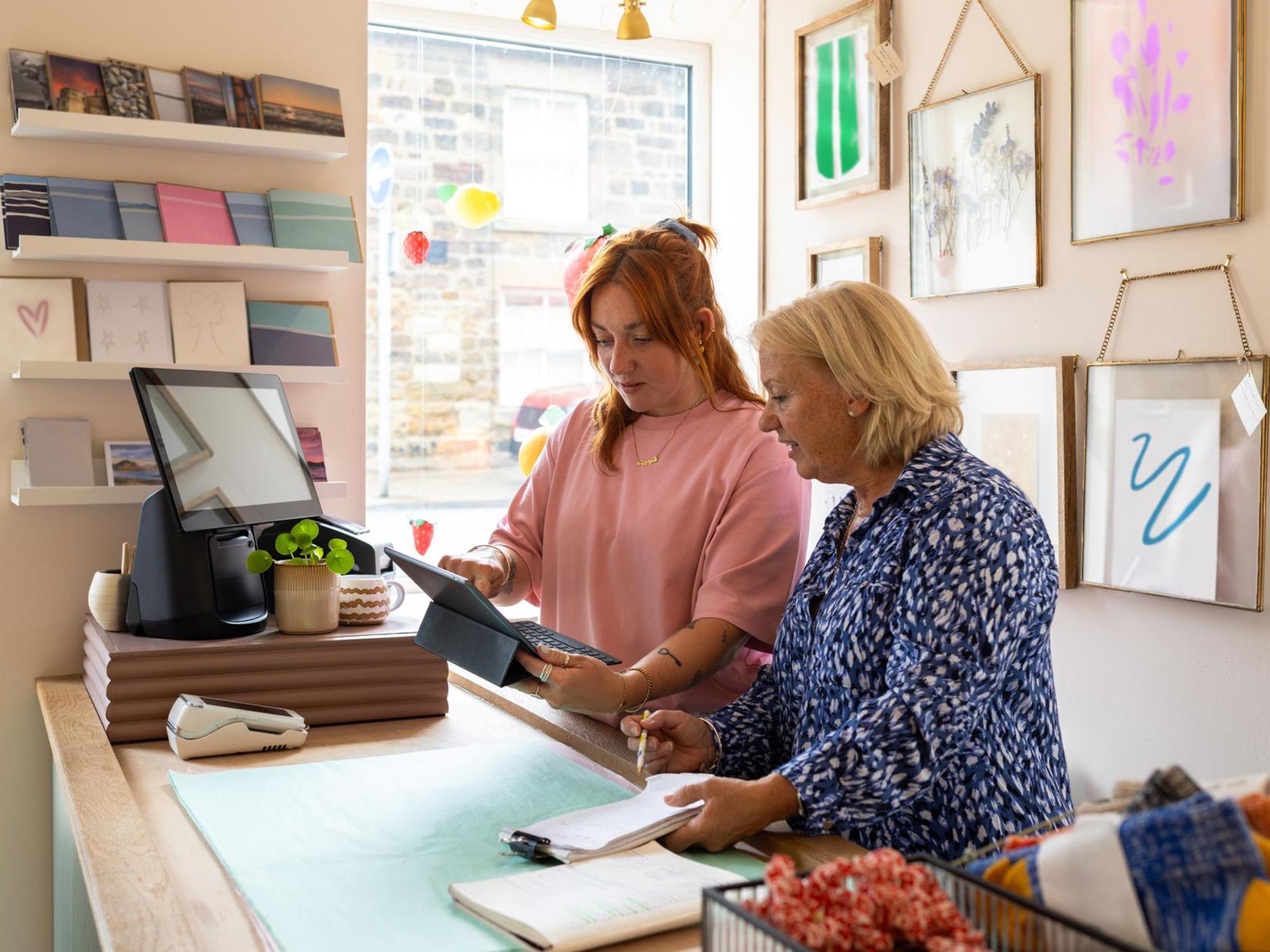
On top of purchasing the business, there are maintenance and improvement costs to consider.
Getty Images
On top of just the purchase, there are also costs for repairs and improvements to consider. When she took over the garden centre, Dhalla introduced POS systems, installed automatic watering systems, upgraded the hoop houses where the plants grew, replaced a wood-burning boiler with a propane system, and made electrical upgrades. “We had to consider it all in our modelling,” says Dhalla. She did, for a time, consider starting a garden centre from scratch, but ultimately decided that purchasing an established business was the better bet. “The economics of [starting a new business] didn’t make sense,” Dhalla says.
Acquiring an established business can also be the better choice when you look at the timeline for earning a profit – that's what worked for Shannon Gallagher. After turning 40 in 2025, Gallagher purchased Smithery Style, a 'shop by shape' women’s clothing eCommerce store. She didn’t have time to slowly build a business and wait for it to become profitable. “My runway is not the same as somebody who’s 20,” Gallagher says.
Like Dhalla, Gallagher had sound finances. She purchased Smithery Style for $165,000, funding the purchase with a $150,000 loan from the BDC and using personal funds to bridge the gap. “You can't have your bank account running on fumes and then buy a business,” Gallagher says. “You have to be able to go to a lender and show that you're a good bet. I was in a fortunate position where I had savings and I looked good on paper from a credit perspective.”
If you play your cards right, buying a business could mean finding a good deal. There’s an element of emotion at play, where sellers don’t end up choosing the highest bidder and instead go for the bid with heart. Boomer business owners of SMEs have put their blood and sweat into the business, building it up for decades; they care about its legacy after the sale, and what will happen to its staff.
"There are companies that you can acquire with very little down simply because there aren’t many buyers for that business."
Whether or not buying a business is cheaper than starting one from scratch depends on a lot of things: your expertise, the industry (please, I beg you, do not buy a business that's going to be taken over by AI), and how much room for improvement exists in the business.
Dhalla believes that buying an established business was cheaper than if she had tried to start one from scratch. “Existing traffic is important,” Dhalla explains. “We’re super well-located and people knew the business before, so there’s a lot of repeat customers. That is priceless, really. That is where the purchase price went, I’d say.”
Established businesses also have the advantage of generating profit from Day 1, making it a less risky prospect compared to a start-up. But it’s only possible if you have the money to make it happen – and the right business plan to assure the boomer-aged seller that you’ll keep the spirit of the business intact.