
Unlike most of its competitors, Toronto’s Throne Barbershop doesn’t make its money by renting out its chairs to independent groomers. Instead, the luxury shop operates on a commission model that offers more earning potential to both the business and its barbers. This also, according to co-owner Marcus Backun, creates a more cohesive, long-lasting, and satisfied team.
“There’s a lot more consistency with the staff,” says Backun. “With chair rentals you might get someone on a three-month term. But we get people that’ll be with us for years and years because we bump them up in commission and take care of them. I find when you’re doing chair rentals, it’s more transactional.”
Throne’s unique business strategies don’t end there; here’s how the company makes it all work.
Getting started
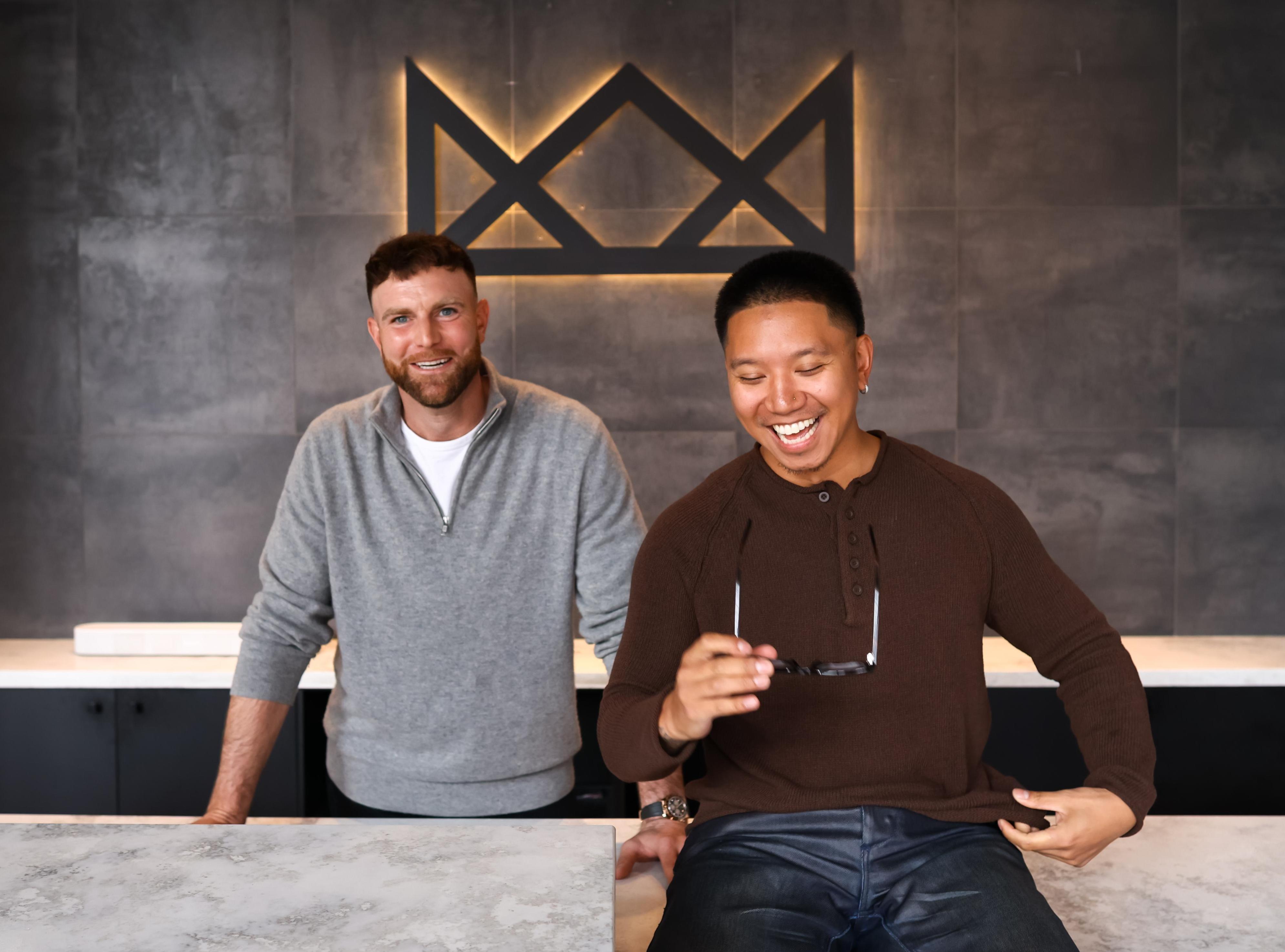
Marcus Backun (left) and Joshua Diamante own Throne Barbershop together in Toronto.
Cole Burston
Backun first discovered Throne not as an investor, but as a customer. It was the middle of the COVID pandemic, and the real-estate-agent-turned-tech-salesman was getting his hair cut by Throne founder Joshua Diamante once a week, drawn not only to Diamante’s skill as a barber, but to what he'd accomplished on his own in five years. A friendship began to blossom, and after about a year of knowing each other, Diamante mentioned that he was looking to move the shop from Yonge and Gerrard to a larger, more central location to better accommodate its affluent clientele. That, coupled with the fact that in-person businesses like cutting hair were struggling during the pandemic, led to a natural partnership.
“He mentioned that he wanted to move locations and try something new, so I said, ‘I can probably help you out with that,’” Backun recalls. “Now we’re five years later.” Throne, which Diamante founded in 2013, moved to its new swanky location at Richmond and Bathurst in 2022. Diamante remains the face and the creative visionary behind the brand as CEO, while Backun, as COO, handles back-of-house administration.
How the money comes in
The vast majority of Throne’s money comes from its men’s grooming services – haircuts, beard trimming and shaping, and braiding – which typically range from $70 to $90, but can go higher. Those offerings, Backun says, make up about 90% of the company’s revenue.
The remaining 10%, about $50,000 to $80,000 annually, comes in a few different ways. First, Throne sells some of the salon products for at-home use; a small handful are usually sold per week. Throne also rents out its shop – a modern space with a masculine, industrial aesthetic – for corporate events and brand activations, and books its barbers on commercials and campaigns (typically charging between $500 and $2,000 per barber per day, depending on the scope of the project). Past clients include the NHL, Universal Studios, and Dove.
Also key to the company’s cool factor are partnerships with professional sports teams, including a long-standing residency with the Toronto Blue Jays. Diamante personally works every home game, offering barbering services for all of the players; because of that, the partnership is treated almost as a separate business venture, but it does great work for Throne’s overall brand equity. Throne has also worked with the Toronto Raptors and Maple Leaf Sports & Entertainment.
What it actually costs
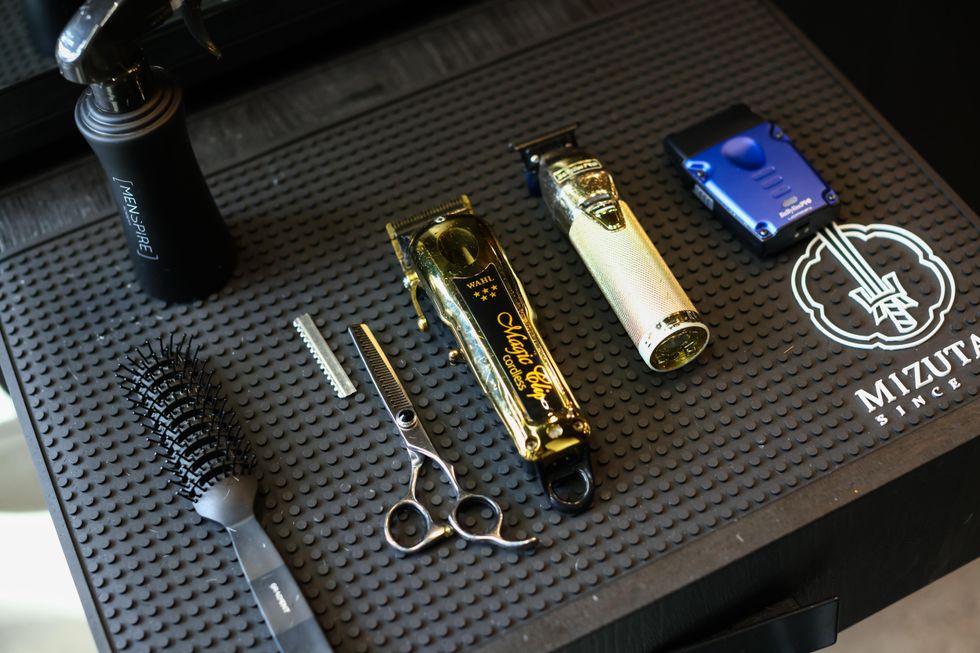
Throne's unusual approach to barber commission separates it from most other shops.
Cole Burston
Throne does all of its daily transactions through a barbershop-specific app called Squire that handles appointment scheduling and payments, taking approximately 3% in processing fees on every sale.
Rent costs about $19,000 per month. When all of the other expenses are added in – towel services, cleaning fees, Squire processing, internet service, security systems, administrative staff, the odd marketing campaign – Backun says Throne runs at about $23,000 to $24,000 in monthly expenditures. The shop has 10 chairs in total; if Throne were to follow the traditional model of renting out its chairs, Backun would need to price each one at $2,400 – at least – just to break even every month.
Instead, Throne pays its barbers a commission on every appointment, which operates on a sliding scale that increases with experience and frequency. For example, a newer barber still learning the ropes will typically be given a 50/50 split with Throne, and be expected to do around four to six haircuts per day. A more experienced barber, meanwhile, will be expected to hit eight to 10 haircuts per day, and can charge more per appointment; they’re also offered a sweeter commission deal: 70/30 or even 80/20 (with the 70 or 80 going to the barber). All barbers keep 100% of their tips, too.
“A lot of these relationships have been built over years, and it’s almost like some of the barbers are therapists for their clients.”
The potential for boosts in commission incentivizes each barber to refine their skills, find more clients, and book those clients more regularly, which also puts more money in Throne’s pocket. “The barbers can obviously make more [on commission],” says Backun. “And if they’re all making more money, then there’s more of an upside to us as well.”
It also works to slow down staff turnover. Backun acknowledges that they definitely do have barbers come and go (it’s the nature of the business), but a big chunk of their people have been around for a long time.
“With our staff, I’d say probably half of them have been with us since opening,” he says. “A couple of our barbers have gone and started their own shops, too, and I’m all for that.”
What's left over
 Operating a higher-end barbershop in downtown Toronto isn't cheap.Cole Burston
Over the past year, Throne has completed more than 10,000 barbering services, sold more than 200 retail products, and processed more than $900,000 in total in-shop transactions. The company has also generated more than $713,000 in gross sales and $687,000 in net sales.
To break it down, Backun uses an example of an $80,000 revenue month. From that, about $45,000 goes to commissioned payroll, and about $23,000 goes to rent and other expenses. After taxes (corporate income tax, HST) are factored in, it leaves Throne about 8% to 11% in profit. “There’s really not much left at the end of the day,” he says. “But month over month, it’s definitely sustainable.”
The Canadian context
Operating a brick-and-mortar shop in the downtown core of one of Canada’s most expensive cities certainly has its drawbacks, particularly when it comes to rental fees, which would be much lower if Throne moved to, say, North York. But the shop’s central location is part of why it attracts the clientele that it does.
Backun also mentions corporate tax rates as a sore spot for him, and wishes that the government would do more to support Canada’s small businesses and help them grow, whether in the form of tax breaks or incentives. “Sometimes it just feels like most of the money gets paid out before there’s anything left for the people putting in all the time,” he says. "It would be nice to share more amongst everyone, but we try to keep as much as we can as a reserve for the business, like emergencies."
The bottom line
Getting your hair cut is expensive, this is true. But barbering is, in many ways, an undervalued craft. For one thing, barbers work with their hands – something of a dying art – and on top of that, they’re working on something deeply personal: your appearance. Second, in a fast-paced digital age on the precipice of being swallowed whole by AI, there's something special, profound, and necessary about a human-to-human experience that can’t be replicated by an algorithm.
“Men usually get their hair cut every one to three weeks, so they do build up a relationship with their barber,” says Backun. “A lot of these relationships have been built over years, and it’s almost like some of the barbers are therapists for their clients.”