
Ten years ago, Justin Trudeau promised me a clean economy. In his scenario, gone would be the belching smokestacks of power plants, replaced by shiny new wind turbines and solar panels, whose electric power I'd use to drive my EV as it zipped down silent highways free of any gasoline stench. Better still, we wouldn’t just be living green, the new government promised, but we’d also be rich. “The global clean technology market presents a promising opportunity for Canadian businesses,” declared the 2016 federal budget, “a source of new clean jobs for the middle class and a driver of prosperity for us all.” The future was bright green.
Fast forward to 2026. Gas guzzlers still fill the roads; EVs, while certainly more prevalent than they used to be, are still the exceptions that prove the rule. The consumer climate tax, Trudeau’s signature climate policy, was cancelled by the same party that brought it in. Saskatchewan is now considering refurbishing its coal plants. Pipelines are back in style. Faced with tariffs and endless global wars, our main solace is our ability to pump and sell oil – an activity which, beyond just selling the main thing causing the climate crisis, produces prodigious amounts of CO2 in the process.
This is the opposite of what I asked for. Dude, where’s my clean economy?
Over its 10 years in power, the Trudeau Liberal government didn't just talk the talk about the clean economy – it spent billions on policies which, they claimed, would make it a reality. Between 2015 and 2024, the government set aside more than $160 billion to “build Canada’s clean economy and reduce emissions,” according to our submissions to the UN. Both of those sound like good things! At the time, it really did feel like a great time to invest in solar power, wind turbines – hell, even Tesla. With the government so firmly on the side of the clean energy transition, this stuff simply had to be the future. All that money was divided across 140 different initiatives, each of which was meant to help squash our emissions while simultaneously creating good, clean jobs.
Well, that didn't happen. But where did those funds go, and why didn’t the policies work?
Internal government audits provide some clues, and the picture they paint ain’t pretty. One of the biggest individual money piles in Trudeau’s climate strategy was the Strategic Innovation Fund Net Zero Accelerator (NZA). “Net zero” refers to the goal of bringing our overall emissions down to zilch by the year 2050 – something the world as a whole will still need to do to avoid the worst of climate change. It’s a worthy challenge, but also a big one: Canada currently emits 694 Mt of CO2 per year; in less than 25 years, that needs to be zero. The government gave the NZA $8 billion to kickstart projects that, together, were hoped to cut up to 20 Mt worth of carbon emissions by 2030.
In the auditor’s damning words, there was “no clear value for money in reducing greenhouse gas emissions.”
Unfortunately, it barely moved the needle. An auditor’s report from 2024 reveals that, of the 17 projects the NZA funded, only five made any real commitment to reducing a measurable amount of carbon. Together, those five projects accounted for just 6 Mt – less than 1% of the total we’d need for net zero by 2050, and just over a quarter of the total the fund was promised to achieve. It’s possible that the other 12 projects the fund supported found successes that weren’t reported, but there’s no way of knowing, since they made no promises and kept no record of their progress. That meant the billions in funding went practically nowhere. In the auditor’s damning words, there was “no clear value for money in reducing greenhouse gas emissions.”
What happened? In short, bureaucracy. Any company looking to qualify for the program faced an absolute mountain of paperwork – the auditor found it took an average of 407 hours to complete, and companies spent anywhere from six months to 4.5 years to do so. Decarbonizing is already a pain for businesses, the auditor noted, and the red tape seemed to turn away exactly the businesses that needed the help the most. Of the 55 highest-emitting companies in Canada, only 15 applied to the NZA, and only two actually received a grant. The government went fishing with an $8-billion worm, and got no bites.
The NZA was just one policy, but the dysfunction it faced was a common feature of the government’s broader climate efforts. A review published in late 2025 found that, while the government had announced various policies since 2021, “none of the measures were implemented effectively to reduce emissions.”
Many of the Trudeau government’s other climate policies were tax cuts meant to make life easier for 'clean' industries. And yet, these also weren’t taken up in any meaningful way. The government put aside $123 billion for these giveaways, $5.2 billion of which was expected to be claimed by March 2025. By July of that year, less than 1% of it had been claimed. That pittance represented just $78 million in business investment, “only a small fraction,” in one auditor’s words, of what it would take to get to net zero. Another tax cut for clean tech manufacturers only saw 25% of its projected uptake. Even free money couldn’t create a green economy.
I wanted to run these results by someone who knew what they were talking about, so I called up Tim Weis, an expert in decarbonization from the Pembina Institute, a think tank in Alberta. While Weis acknowledged that Canada’s progress on climate change has been a “mixed bag,” he says we did make real progress over the Trudeau years. “We’re still in a stronger position than we were 15 years ago,” he says. “I don’t want to paint a doom and gloom picture. The progress isn’t linear.”
“It would be naive to assume that any particular government or prime minister would be able to turn that ship on a dime.”
What, then, explains the lack of uptake from all those clean industry tax credits, or the difficulty reducing emissions? For one thing, Weis says, timeframes are important: while an auditor might look for results in five years' time, infrastructure takes a lot longer to pay off. Just like the coal and gas power plants they’re built to replace, clean energy sources take time to build, and can last a lifetime. These are long-term assets that deliver long-term results, meaning their benefits may not be obvious straight away. “It would be naive to assume that any particular government or prime minister would be able to turn that ship on a dime,” says Weis.
Fair enough, but the Trudeau government was in power for a full decade. Is this really all that could be accomplished in that time? The other problem, says Weis, was politics: green infrastructure would have been most effective in Alberta and Saskatchewan, where much of the country’s carbon emissions come from, but the federal government is obliged to spread the love Canada-wide. That could mean, he says, financing a wind farm in Quebec, even though the electricity grid there is already full of nice, green hydro power – something the Canada Infrastructure Bank did in fact do last year.
And when it comes to tax credits, Weis says, politics and time frames start to co-mingle. “If you’re not convinced the government – or the future government – is going to keep that policy in place, it can be a risk [for businesses banking on it].” That’s a core problem with the tax break model: Any projects that the tax break enables is, therefore, one that will be dependent on it to survive. In addition to that, say a clean tech entrepreneur wants to start a new venture, and they've gone to the bank for a ten-year loan to get started. Suddenly, the current government offering a clean-tech tax break isn’t enough: both the entrepreneur and the bank have to be darn sure that the same tax relief will still be available two elections later. That’s not a risk anyone wants to take. Weis says it takes time for businesses to be convinced that a tax credit will exist for the long haul, creating a lag between announcing the credit and the eventual uptake.
“Alberta has the famous bumper sticker, ‘Please Lord, give me another oil boom and I promise not to piss it away.'"
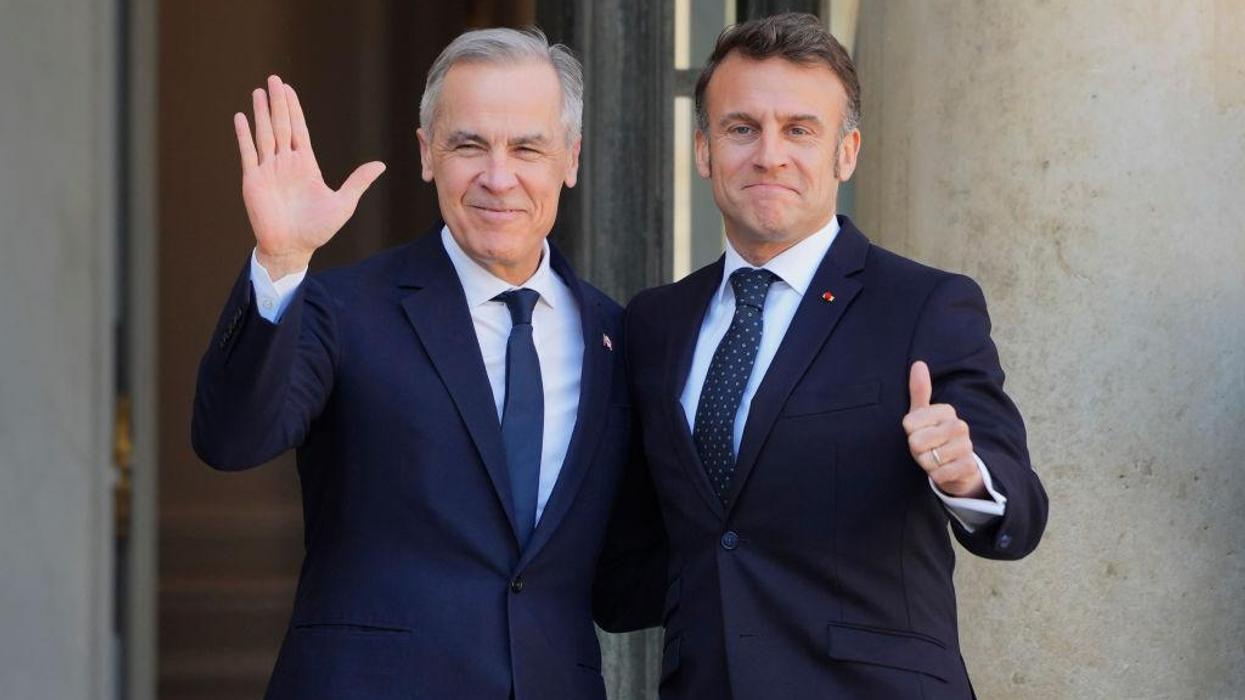
Confidence in clean tech, therefore, is intrinsically tied to confidence in government policy, and politics is a tricky thing. Let’s not forget that, for much of the later years of his government, Trudeau was polling well behind Pierre Poilievre, a man who signalled his evident disdain for climate policy by shouting “Axe the Tax” at every possible opportunity. (Poilievre also said that he’d use tax credits to reduce industrial emissions, albeit with much less volume or enthusiasm). So it's unhelpful that Mark Carney, as Trudeau’s actual successor, has been at best lukewarm on climate policy, and has described the previous government’s emissions targets as “not sustainable over the long term.”
Weis and I did agree on one thing: the green economy has yet to materialize. “We haven’t seen the clean tech growth in Canada that people had envisioned – or hoped would show up – at scale,” he says. And yet, Weis points out, that hasn’t been the case for the rest of the globe. Solar power has become the fastest-growing source of energy in the world, helped along by increasingly cost-effective batteries. In China – both the world’s second-largest emitter and its industrial heartland – EVs are taking off like wildfire, both for domestic use and for export. All of those things are coming for oil, which has already largely peaked in China. “People overlook these moves to their peril,” Weis says.
It raises the risk that, if Canada stays in the bad old days of oil, gas and coal, we’ll be left obsolete in the global energy transition. That would be especially bad news for the parts of the country dependent on oil and gas production. “Alberta has the famous bumper sticker, ‘Please Lord, give me another oil boom and I promise not to piss it away,’” says Weis. “We need to internalize that. Where are Alberta and Saskatchewan going to be as decarbonization continues globally?”
Trudeau's promises sent a clear message about a clean economy: we’re in this for the long haul, and you can bet your capex on that.
That creates a dilemma. It’s both risky and potentially ineffective to attempt decarbonization from the top-down, but simultaneously, if we don’t get with the times, the energy transition could be something that happens to Canada as the world leaves us in the dust. In that sense, throwing policies at the wall to see what sticks may be better than nothing: any one that works helps make us that much more prepared for the future.
Another perspective is that the Trudeau government actually did its part just fine, and it's businesses themselves that should take the blame; after all, they were the fish who refused to bite. The government itself estimated that decarbonization would take up to $140 billion in annual investment, more than the feds have spent on climate measures in total over the last ten years. The money will have to come from somewhere else, and that means the private sector will have to get involved, and generally, things don't really get cheaper in the private sector.
Perhaps, then, I’ve judged Trudeau too harshly. Yes, his promises of a clean economy were wildly overblown. But a political speech can be many things, and unrealistic as it may have been, his promises sent a clear message about a clean economy: we’re in this for the long haul, and you can bet your capex on that. That’s more than can be said for Carney, whose waffling on climate policy has sent the opposite message. For a guy who used to run a bank, you’d think maintaining investor confidence would be his whole thing.
It’s even more baffling in the context of Carney’s other big policy push, to build big things that will last a long time – things like ports, powerplants, transmission infrastructure, and the like. Big investments have long shadows, and if we chain ourselves to the wrong train (like, say, investing in fossil fuel exports in a world that’s about to reject them), we’ll be screwed for just as long. Likewise, our auto sector, already ravaged by tariffs, will only hasten its own end if it fails to produce clean cars. Absent our own EV production, we’ll be stuck importing the cars we could have made ourselves, like we’re already doing with Carney’s latest deal for Chinese EVs.
Investing in Canada’s future means building for a decarbonized world, and it’s the government’s responsibility to get the economy on board. Businesses want to be able to make long-term plans, and the Prime Minister needs to as well – not just about oil and pipelines, but about what industries will still be around in 30 years. And if that means being a little hyperbolic and waxing poetic about a wonderful green utopia waiting just around the riverbend – well, so be it.
And so, Prime Minister Carney, you have my permission: Start whispering those sweet nothings. Tell me everything I want to hear. Yes, I’ve been burned by the 'clean economy' before. But considering the alternative, I’m ready to be hurt again.