
Today’s take for July 13, 2026
The story: The girls are fighting! Just two years after signing a big, happy collaboration agreement, Apple (Nasdaq:AAPL) and OpenAI are now at each other’s throats, with Apple dropping a bombshell lawsuit against its former bestie last Friday. (Yes, my colleagues have been talking endlessly about Love Island USA next to my desk; why do you ask?) In the suit, Apple accuses OpenAI of actively poaching Apple's personnel and pressuring them into sharing company secrets. In particular, it claims that a former Apple VP and 24-year company veteran who left for OpenAI actively encouraged interviewees to share internal prototypes from Apple with OpenAI. The suit also names Chang Liu, an engineer who allegedly exploited a bug to access Apple’s cloud file storage – about which he texted a former colleague, "LOL, I found out I can access the [network storage], so funny". Criminal masterminds, clearly.
Why it matters: In a kind of backwards way, Apple’s anger is a vote of confidence in OpenAI’s mysterious new hardware play. In May 2025, OpenAI paid US$6.4 billion to acquire io Products, a hardware company founded by former Apple design guru Jony Ive. Since then, OpenAI has only released hints and whispers about what the new gadget will actually be, with some speculating it’ll be a screenless audio device designed to help users and ChatGPT have out-loud conversations – like a more verbose, ingratiating Alexa. That might not sound like much, but if it’s got Apple worried, perhaps it’s worth something after all.
What this means…
- For investors: OpenAI remains a private company, so there’s no ticker price to watch here. However, if it's got a fully AI-capable Alexa replacement in the works, that might mean it's coming for Amazon’s (Nasdaq:AMZN) lunch.
- For consumers: Potentially a sign that OpenAI wants to emulate the Apple experience of slick, game-changing devices – and ones that actively encourage users to literally chat with ChatGPT.
- For OpenAI: Yet another lawsuit to add to the pile. OpenAI is subject to multiple lawsuits on a variety of topics spanning harm to users, wrongful death, and copyright violations. Now it can add 'corporate espionage' to that list.
Bottom line: Ever since launching ChatGPT, an AI built by acting first and worrying about consequences later, OpenAI’s strategy has basically been to ask for forgiveness rather than permission. It’s no surprise that it would do the same thing for a hardware play. Like ChatGPT itself, the real test will be whether the value of whatever OpenAI ships will be enough to pay for the fallout.
Follow the Money
The Headline: US to get some tolls from Gordie Howe bridge, despite Canada footing the bill
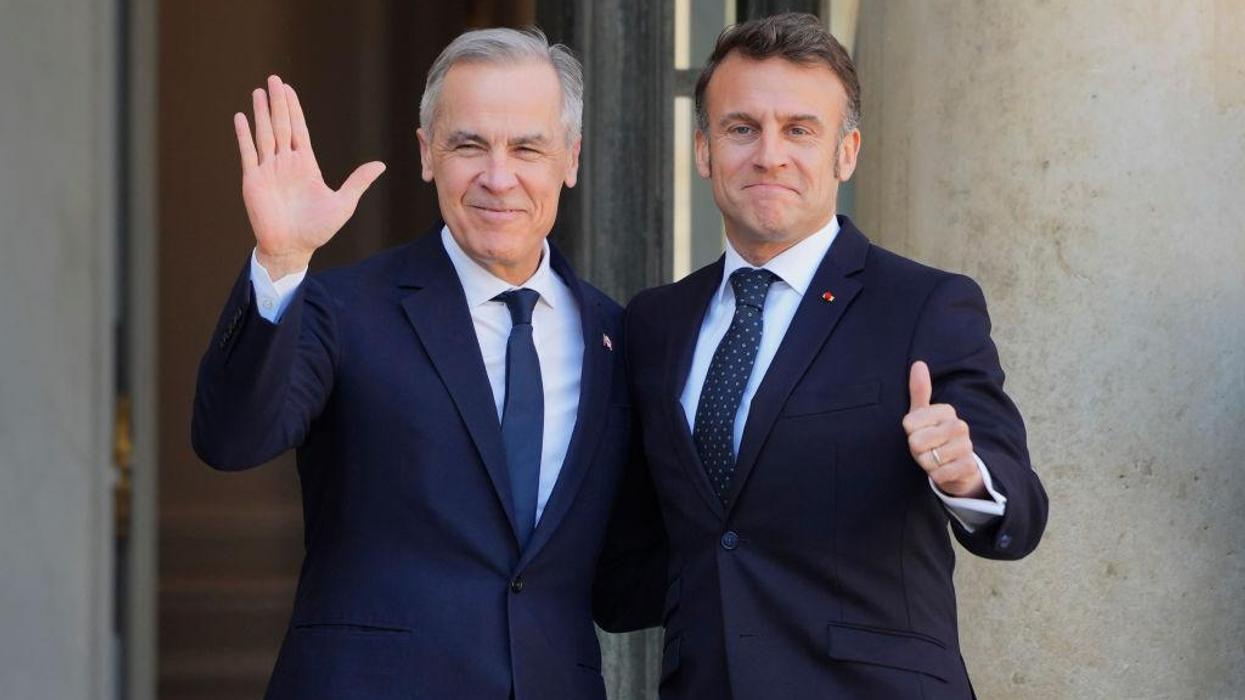
The announcement: The US and Canada have finally reached a deal to open the Gordie Howe bridge, the shiny new crossing between Windsor and Detroit. Controversially, the deal will also see the US see a share of its tolls – cash that was supposed to go entirely to Canada to pay down the $6.4 billion we spent to build the thing.
Who benefits: The US, which gets uninterrupted access to its biggest trading partner and collects a payment every time something crosses the border.
The how: Donald Trump has been playing bridge troll with this thing, refusing to open it without getting something in return. Now, 50% of the net profits will go to an “economic development fund” that will be invested on the US side of the border, with the remainder going to Canada. Mark Carney emphasized the word "net," saying that tolls would first go towards paying off Canada's costs and debts on the bridge, and after that's repaid, the tolls would be split with the US. But an honourable mention to Matthew Moroun, owner of the Ambassador Bridge, the other bridge across those troubled waters, whose US$1 million donation to Trump’s campaign allegedly helped delay the opening of this rival bridge.
The Number
$98.8 million (US$69.9 million)
Context: That's how much TC Energy spinoff South Bow Corp will pay in penalties and remediation in a settlement with the US Justice Department for its role in the 2022 Keystone oil spill, which sent 13,000 barrels of crude gushing into a creek in Kansas. South Bow will pay $38 million (US$26.9 million) in a civil penalty for breaches of the Clean Water Act, commit another $56.6 million (US$40 million) to make sure this sort of thing doesn’t happen again, and pay Kansas $4.24 million (US$3 million) for natural resource restoration projects.
What it means: US environmental protections can still bite, but not very hard: South Bow has a $11 billion market cap and pulled in USD$1.9 billion in revenue last year, and these fines come in at just 0.03% of that. For the creek drowned in sticky, suffocating crude, that day in 2022 was a disaster, but for the company responsible, it’s barely more than a rounding error.