
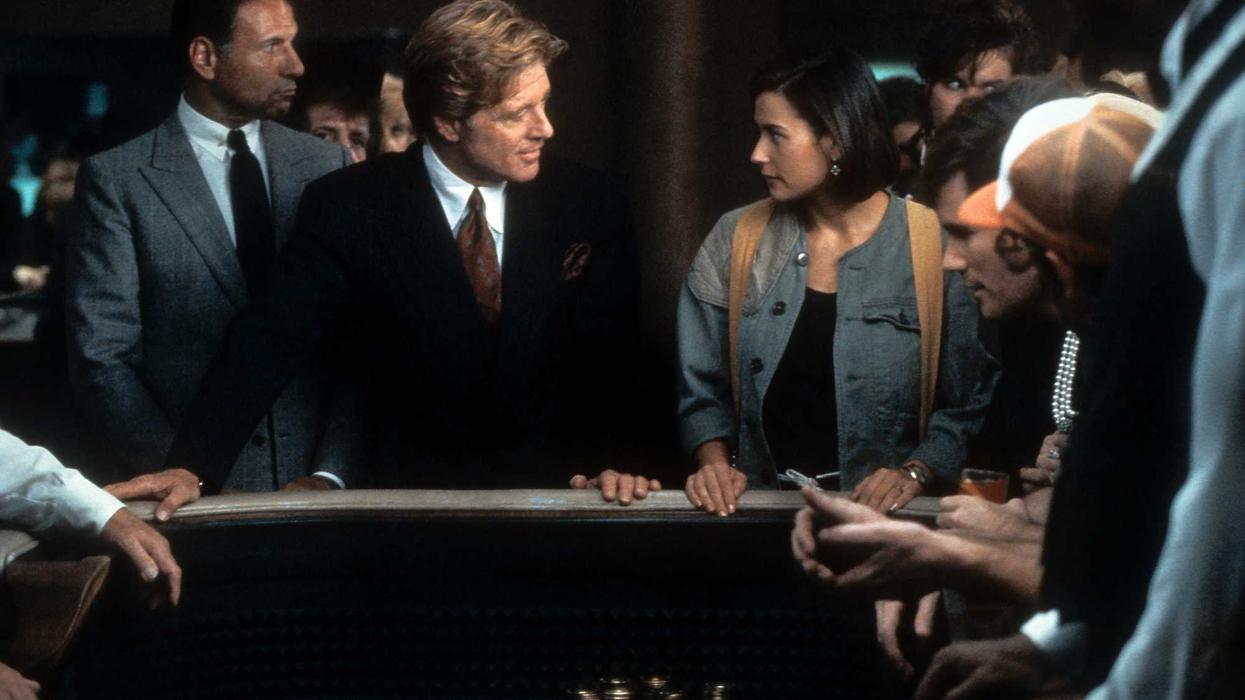
Way, way back in the year 1993, one million dollars was enough to ruin a marriage. At least, that was the premise of Indecent Proposal, in which a husband and wife say yes to letting Robert Redford (RIP) sleep with her for a seven-figure payout, then spend the rest of the movie paying for that decision in every way, including the money.
The proposal might have been indecent, but the dilemma itself was preposterous, even in 1993. We’re talking about Robert Redford in his second prime (the first being The Sting, obviously), and most of us would have paid him to just brush our hair. But in the erotic thriller, the question of what one would give up for a game-changing payout led to a bona fide blockbuster and cultural moment. Just think of what you could buy with a million dollars. Imagine all that dijon ketchup.
That was back when one million dollars meant something. And it especially meant something to the movie’s main characters, who were staring down the same beast that we in 2026 know all too well: a recession.
In the film, we’re introduced to David and Diana Murphy (Woody Harrelson and Demi Moore, respectively), who seem to live a charmed life. Together since high school, the two are living off of Diana’s income as a real estate agent so that David can chase his dreams of designing the duo’s beachside forever home – a house that Roger Ebert described as “so architecturally undistinguished that the filmmakers should have ordered another one.”
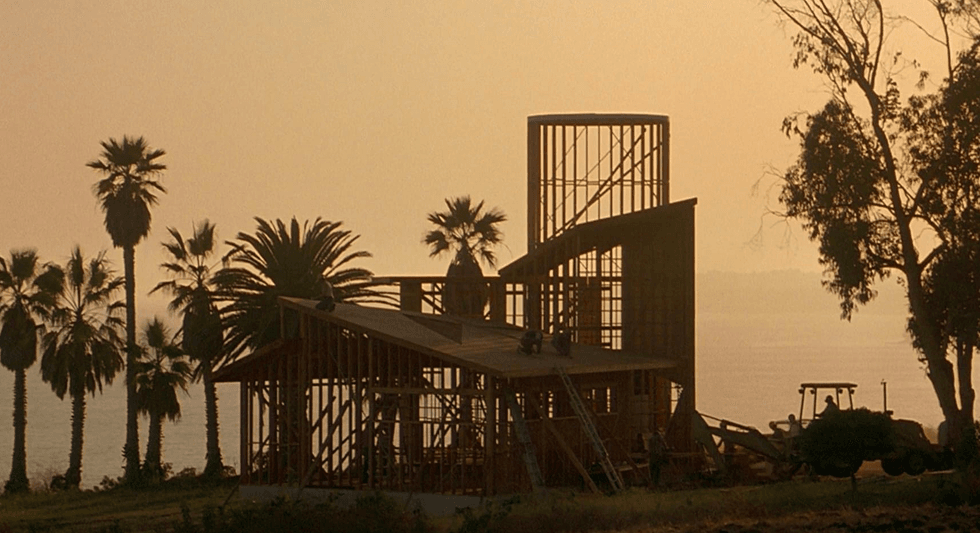 A house that Roger Ebert described as "so architecturally undistinguished that the filmmakers should have ordered another one.” Paramount Pictures
Unfortunately for them, the market turns before they can finish construction, and Diana’s paycheques quickly dwindle – as anyone who’s old enough to remember 2008 can attest, the last thing anybody wants to buy in a recession is a brand-new house. In short order, the Murphys find themselves not only broke, but owing $50,000 in construction loans they’re unable to pay off (and that’s USD, which also used to mean something).
Confronted with the very real possibility of losing both their dream home and the land it sits on, David and Diana take the next logical step: they hightail it to Las Vegas to gamble what’s left of their money, because wisdom and responsibility might be fast, but the Murphys are faster.
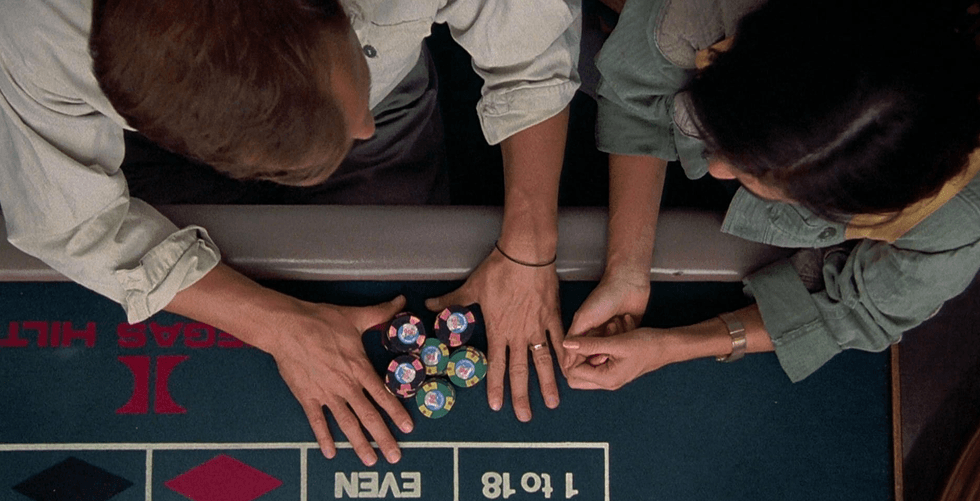 When you've lost all your money to your "dream," Vegas is clearly the best option. Paramount Pictures
Enter: John Gage (yes, played by the Robert Redford), a career high-roller who notices Diana from across the casino floor and just, like, really digs her vibe. And in addition to the $25,000 David manages to win at craps, John proposes a sexy scenario with a substantial cash bonus: if he paid David $1 million, could he spend the night with David’s wife – and all that that implies?
The Murphys say yes, because a) duh, and b) have you seen Redford? Their marriage almost immediately implodes, a turn of events that surprises exactly nobody who has ever tried to open their relationship to an opportunistic billionaire.
 Who could resist, especially with that smile? Paramount Pictures
But if Indecent Proposal were set today and a golden Robert Redford wanted to make the same offer, a million dollars wouldn’t cut it. He’d need to offer something closer to… well, let’s do the math. (All prices are in USD.)
Let’s start with the Murphys’ precarious finances. In 1993, housing prices in California were plummeting – a Los Angeles Times report from August of that year revealed that one home in West Covina sold for just $155,000, despite the $190,000 asking price. As I write this, the U.S. Bureau of Labor Statistics’ inflation calculator only provides data up to December of 2025 (eons ago!), but we can probably assume that in today dollars, that’s equivalent to roughly $347,000 (for the selling price) and $425,000 (for the asking price).
Of course, the inflation calculator only measures general inflation, not the California housing market, which has been doing its own thing entirely. According to the California Association of Realtors, the median LA County home sold for around $201,000 in 1993. By December 2025, that number came to nearly $891,000, an increase of roughly 343% – more than double the rate of general inflation over the same period. And that’s just the county median! For a beachfront property in Santa Monica, we’re talking about numbers that would probably make the inflation calculator self-destruct.
To avoid going cross-eyed, let’s stick with the 1993 dollar amounts for now. At that time, the average cost for a new residential build in LA County was $133 per square foot. Based on this image of the Murphys’ unfinished estate, however, their house is anything but “average” – a better descriptor might be “an early-nineties monstrosity.” According to Forbes, a mansion in the United States is defined as a home of at least 5,000 square feet. The Murphys’ new build is big, sure, but not castle-big, so let’s go with 6,000 square feet (the turret itself looks like its own small apartment building). We’ll even be generous and use the average per-square-foot cost for the county.
So, with $798,000 in construction costs still ahead of them and $50,000 owed immediately – and with David definitely not getting paid to design any of it (it’s his dream) – the Murphys were staring down roughly $848,000 with no income and no savings. (That’s $1,889,875.70 USD in modern currency, just accounting for inflation. What it would actually cost to build in LA County today is a number best left unexamined, like David’s life choices.)
Given all that, frankly, they had to risk it all in Vegas. What other choice did they have?
Then David wins $25,000 at the craps table, bringing their debt down to $823,000 – and just a reminder that this number does not include the cost of anything beyond “not losing the money pit we hope to one day call home because of David’s stupid dream.”
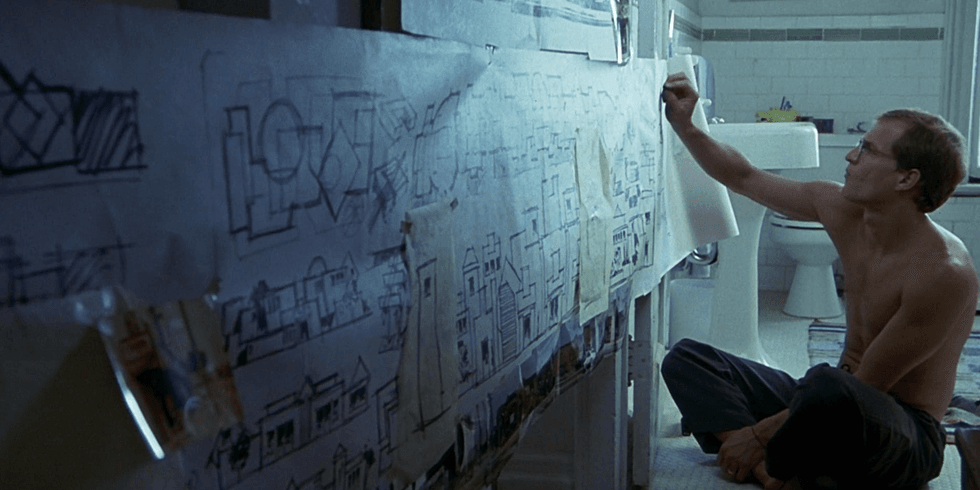 David, trying to figure out why they're losing so much money on his "dream." Paramount Pictures
Be honest: John Gage’s proposal is starting to look even better than Redford did back then, isn’t it? But that was 33 years ago. The real question is what Gage would need to offer today to make the same proposition work.
If you go the simple inflation route, the 2025 price would come out to $2,250,375. The thing is, that number just doesn’t have the same je ne sais quoi that the $1 million offer had back then. In 1993, being offered One. Million. Dollars was a fantastical proposition. There were roughly 3.7 million millionaire households in the U.S. that year; today, there are nearly 24 million individual millionaires, mostly because it turns out just owning a house and an index fund for 30 years will do that. The word has lost a lot of its sparkle, and a million bucks now is just a decent condo in a mid-tier market.
If the point of John Gage’s offer was to make the Murphys feel like something genuinely unimaginable had just become possible, $2.25 million doesn’t quite cut it. The number that carries the same psychological weight, the same vibes as $1 million dollars has gotta be bigger – not even seven figures is gonna cut it.
My gut call? You shouldn’t get into bed with John Gage for less than $10 million. It’s less than a Dr. Evil ransom demand, but it’s still more than most Canadians will accumulate over their entire working lives, including the house.
Back in 1993, the Murphys would have been left with just $177,000 to last them for the foreseeable future – that’s nearly $400,000 USD today, which sounds like a lot until you remember they have no income and a marriage held together with scotch tape. They’d still have to worry about the cost of food, gas, car payments, and what I can only assume is a very expensive couples therapist.
And that’s not even considering that in the movie, David ends up spending the entire $1 million on a hippopotamus at a charity auction. Now that’s what I call indecent.