
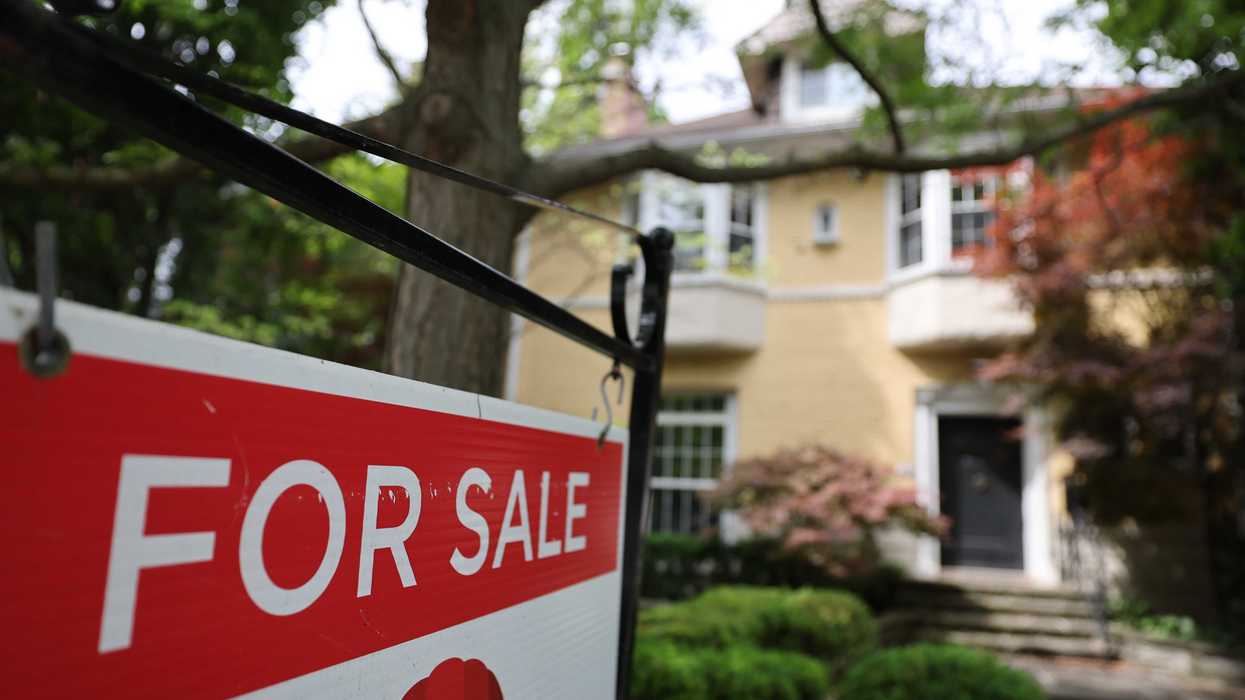
A house, a dog, a backyard big enough to build a snow fort in: the Canadian dream is basically just the American Dream with a toque on. And, while our grandparents made it seem attainable, these days, that dream seems more like a fantasy – the price of simply being Canadian keeps climbing, and our paycheques simply aren't keeping up. When that house costs more than most people can earn in a lifetime, what's the point of even trying to save for one?
It’s time to call it: the Canadian dream is dead. Its resting place is a shoebox condo; its last testament, a generation of adults living in their parents’ basements. This is no way to live, but live we must – and something's gotta give. But what?
Well, if owning is off the table for the vast majority, then the new Canadian dream needs a serious overhaul. So we decided to look to three world-class cities where renting is the norm (and has been for generations) for some valuable guidance.
Paris
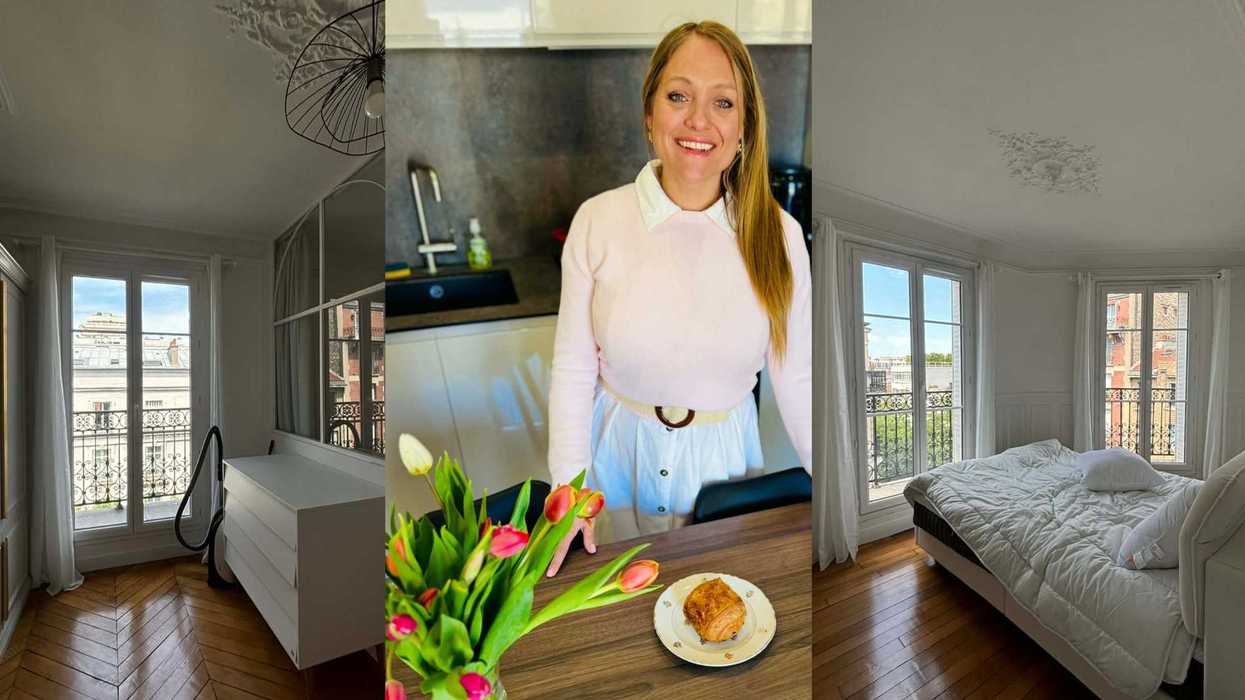 April Pett prefers the "romantic" attitudes of Paris, where she's lived for the past 12 years. April Pett
Visit the city of lights, and you may find a Canadian giving you a tour. April Pett, a 40-year-old from Thorold, Ont., moved to Paris 12 years ago and has been living an idyllic life ever since: running her own tour company, drinking wine, and waking up to a view of the Eiffel Tower from her bedroom window.
“The social norm here is more romantic,” she says. “We collect memories instead of things.” Her first apartment in the city was a mere 140 square feet, smaller than some of her clients’ ensuite bathrooms. And while she now lives in a nearly 600-square-foot place, it’s not cheap: she and her boyfriend split a monthly rent of roughly $3,900 CAD.
The social norm here is more romantic. We collect memories instead of things.
Pett may pay a premium for her prime location, but renting is the norm in Paris, and so is paying dearly for it: only one in three Parisians own their homes, and one has to be well-off to do so. The average rent for a one-bedroom apartment in the city is roughly $2,000 per month, a sum that should be familiar to any urban renter in Canada. That’s still cheap compared to buying: houses and condominiums there are significantly more expensive than in the average Canadian city, and few come onto the market. As a result, it's normal for people to treat Paris as a temporary home; working there for a decade or two to establish their careers before decamping to one of France’s many bucolic towns to raise a family. In Amiens, a historic town of 130,000 people two hours outside of Paris, half a million CAD will buy you a 1,345-square-foot, five-bedroom house with three fireplaces. The same price can get you a three-bedroom place in London, Ont. – minus the fireplaces.
Grocery costs are lower to boot: a litre of lait and a baguette both cost a full dollar less in Paris, partly because the French government negotiates food prices directly with more than 75 suppliers and retailers every year, keeping competition healthy and costs in check. Transit is similarly cheaper: employers are required to reimburse their employees 50% of the cost a monthly pass, so it ends up costing about $73.40 CAD, which is $30 less than a Montreal transit pass and half the cost of the TTC.
Tokyo
 Tokyo rents can be steep, but moving to the suburbs is generally more affordable than it is in Canada. Francesco Ungaro / Pexels
As a kid growing up outside of Tokyo, Taku Yamaguchi dreamed of owning a house in the suburbs one day, living a contented life with his wife, a rocking chair, and perhaps a cat. These days, the 39-year-old's dreams seem far away. “I can see the ‘typical life model’ – getting married, having kids and seeing your grandkids before you die – fading away,” he says.
Yamaguchi and his peers in Tokyo are facing a similar reckoning as many Canadians. “For my parents’ generation, owning a home was one of the ultimate goals,” he says. “Nowadays, people are perfectly fine with renting.”
As in Paris, rents can be steep. His 400-square-foot apartment runs slightly more than $1,200 CAD per month – cheap by Canadian standards, but Tokyo salaries average around $3,700 CAD monthly, meaning Yamaguchi’s rent eats up 33% of a typical paycheque. Canadians earn more, averaging more than $4,000 a month, but our sky-high rents more than cancel that out, leaving many urban renters paying upwards of 40% of their income on housing.
Yamaguchi says several of his friends have moved from Tokyo to towns on the periphery, where housing prices can be half what they cost in the city. That’s the case for Tokorozawa, the town where he grew up. Thirty kilometres outside of Tokyo, it’s a 45-minute train ride or 45-minute drive into town – roughly the same distance as Newmarket to Toronto, or Coquitlam to Vancouver, but far more affordable than either place. One recent listing offers a 700-square-foot, two-storey house for just over $300,000 CAD. Back in Canada, that'll get you a shoebox condo half the size – if you’re lucky. For a place of similar size in Coquitlam, budget twice that.
Vienna
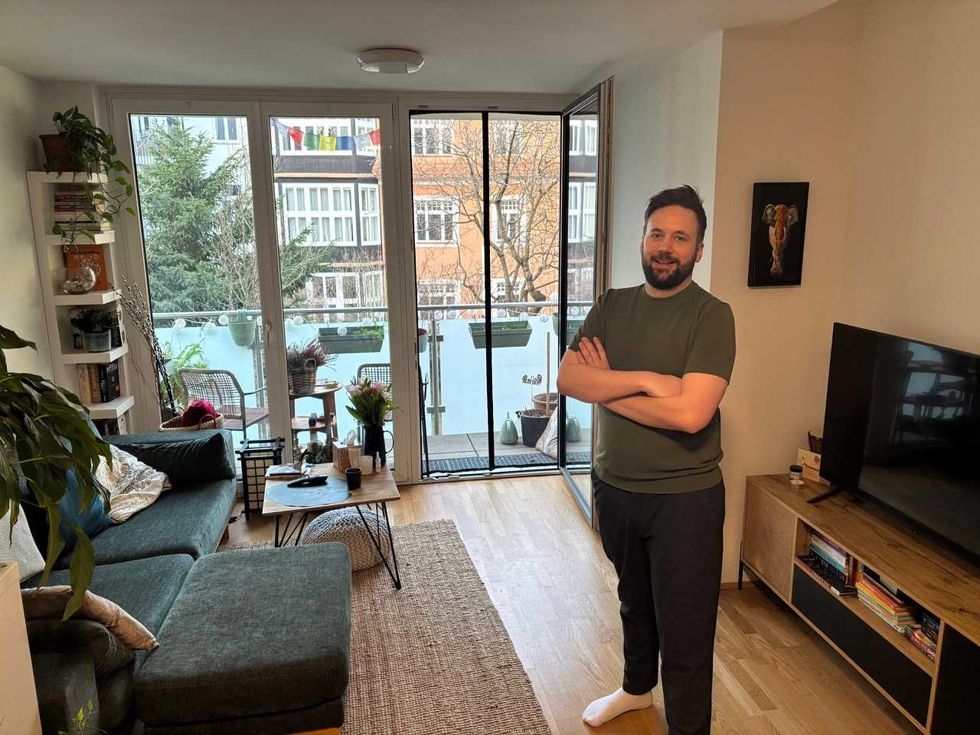
Martin enjoys living in Vienna, which he describes as "a very chill place."
Martin L.
Martin L. (who requested his last name not be published for privacy reasons) moved to Vienna ten years ago from Germany and, like most people in the city, is having a very relaxing time. “Vienna is a very chill place,” the 37-year-old mental health worker told me. “There’s a saying that if World War Three breaks out, ten years will pass before we notice.”
A near-total lack of housing anxiety may be one cause of their city-wide blasé. Ever since a socialist city government in the 1920s and '30s went on a spree of public housing construction, the city has had a strong tradition of non-market housing, with private for-profit apartments accounting for just 60% of the total. The remainder is, in roughly equal parts, city-owned social housing or resident-owned, not-for-profit housing co-operatives. The result: a city where housing is 40% more affordable than the Canadian average.
All that non-profit supply has downward effects on the private housing stock, too. Martin rents from a private landlord, but pays just $2,100 CAD for a 600-square-foot apartment. When he thinks of the future, it doesn’t involve a house – those are hard to come by – but instead, a unit in a housing co-operative.
To join one, Martin would apply through the city's housing registry, then pay a financial contribution to the co-op – which typically costs tens of thousands of euros, but is refunded if/when he moves out. Once in, he’d pay monthly fees of roughly $1,450 CAD for a large apartment. Of course, eligibility isn't unlimited: applicants need to have lived in Vienna for at least two years and mean income thresholds, which means the system is designed for residents, not a shortcut for newcomers. But for those who qualify, the upside goes far beyond cost. If it’s a new build, residents have a say in how to lay out the building, including what shops or amenities would go in the ground floor. Many have cafes that double as hangouts for the residents, or kindergartens and playgrounds for their kids. Indeed, many co-ops are expressly built by young families looking for a place their size.
Ever since a socialist city government in the 1920s and '30s went on a spree of public housing construction, Vienna has had a strong tradition of non-market housing.
If all this sounds utterly foreign, it’s because co-op housing tends to require government support, and Ottawa lost interest for over 50 years. But in 2024, the Trudeau Liberals earmarked $1.5 billion for the new Co-Op Housing Development Program, a pool of forgivable and low-interest loans to finance new housing co-ops. The first wave of funding went out last year, and has already resulted in plans for a new 612-home development in Toronto. Further waves of funding are expected to open between now and 2028, potentially leading to similar developments country-wide. If Canadians want in, they’ll have to be proactive: unlike a developer-led condo or subdivision, co-ops are organized, developed, and funded by the future residents themselves. On the bright side, it might be the first and only time you'll actually get to choose your neighbours.
The lesson from Paris, Tokyo, and Vienna isn't that renting is a consolation prize. It's that renting really can work – when the conditions are right.
Each city got there differently: Paris leaned on government intervention and market competition to keep everyday costs – like groceries – down; Tokyo's centralized zoning laws kept housing supply high enough that its suburbs stay within reach; and Vienna took housing out of the speculative market almost entirely, replacing investor-funded development with resident-owned co-ops that serve the people who actually live in them.
Canada has been painfully slow on groceries and has taken only tentative steps on zoning, while co-op housing is just now getting meaningful federal attention. But structural change is possible. Get a few of these things right, and Canadians might finally have enough breathing room to find out what the new dream looks like, whether that's raising a family without a looming mortgage, retiring comfortably without home equity, or just being able to afford a good life in the city you actually want to live in.
The dream was never really about the house. It was about the stability a house represents.
The Canadian dream is dead. Long live the Canadian dream.
----------
Correction: A previous version of of this story misspelled April Pett's last name and misstated her age. She is 40 years old.