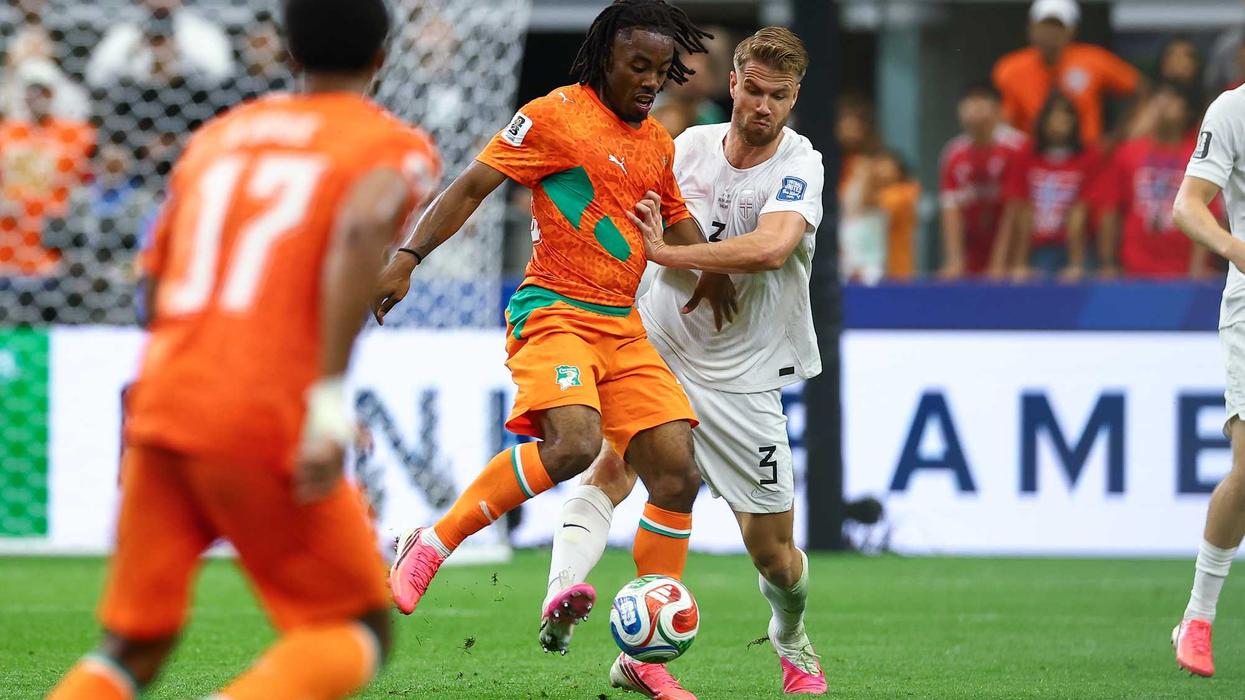
Two weeks before the World Cup kicked off in Canada, Mexico and the United States, French soccer player Elye Wahi was arrested in Marseille, where he plays in France’s domestic league. French police specializing in corruption offenses had noticed something strange about the striker’s last game against FC Metz: sports bettors had put unusually high sums on the chance Wahi would receive a yellow card in that game, and sure enough, he got one after tackling an opposing player.
The police never charged Wahi with any crime, letting him go after an interview, and just three weeks later he was in Toronto, playing against Germany for Ivory Coast in the 2026 FIFA World Cup. But had that suspicious game occurred on Canadian soil, authorities here would have had even less recourse: unlike France and most other developed countries, Canadian police have little authority to arrest someone on match-fixing suspicions alone.
“Canada is extremely vulnerable to competition manipulation,” says Jeremy Luke, CEO of Sport Integrity Canada, the country’s main sports ethics organization. “I see it as being as big a threat as doping.”
Canada, as it turns out, has an enormous blind spot when it comes to competition manipulation, and with FIFA already come and gone and the World Cup heading into the quarterfinal stage, the deadline's passed to figure it out. This World Cup could be the most bet upon tournament in history, with the total amount projected to exceed US$50 billion, and all that money is attracting shady characters. The UN warned that organized crime is looking to get in on that action, potentially corrupting players and officials to throw points, matches, and referee calls so that pre-planned bets can be guaranteed to hit.
That means competition manipulation and sports betting are linked at the hip, but unfortunately, our laws haven't caught up. When Canada legalized single-event sports betting in 2021, it failed to follow up with proper legislation against match fixing. That’s left us with a FIFA-sized blind spot. It’s not legal for an athlete to throw a game (technically, one can be charged with conspiracy and fraud) but those laws are mighty difficult to enforce.
“We brought in the whole sports betting system without learning from our European colleagues,” says Richard McLaren, a senior law professor at Western University in London, Ont., who specializes in sports law and advises several sports integrity bodies.
France was able to arrest Wahi because it has laws specifically against match fixing. Likewise, the US has the Racketeering Influenced and Corrupt Organization (RICO) Act, a law broad enough that they used it to take down Jontay Porter, the former NBA player given a liftime ban from the league for his involvement in a 2024 sports betting scandal.
In Canada, however, it’s much harder to be hit with a RICO (or a Canadian equivalent). Our conspiracy laws require proof that a specific person was in on it, which is incredibly difficult to establish. “You can’t send the police in and investigate if they don’t have the ability to charge the player under a civil or criminal statute,” says McLaren. Had Wahi’s game against Metz happened here, the Canadian cops would have had nothing to go on.
“We brought in the whole sports betting system without learning from our European colleagues."
Since police can’t go after the athletes, that leaves only two other targets in a suspicious bet: the bettors themselves and the sports betting companies that took their money. So far, Ontario is the only province with a fully-fledged regulated sports betting market, though Alberta is set to launch their own this month. If a sportsbook headquartered in Toronto sees something suspicious, they’re obligated to report it to an independent monitor, who will tip off Ontario’s regulator if they agree something’s up. An alert also goes out to the independent monitor in Europe. That's a lot of steps between a suspicious bet and anyone actually doing something about it.
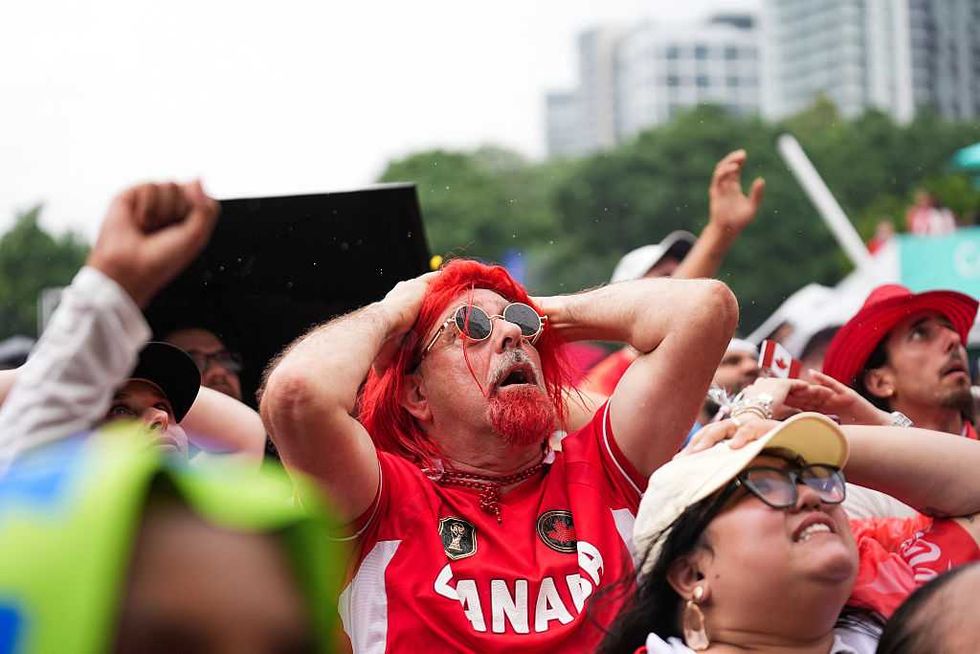
Total bets on all World Cup games are estimated to exceed US$50 billion.
Getty Images
This chain of relationships between sportsbooks, monitors, and regulators creates weaknesses that match fixers can exploit. “If that relationship breaks down, then they get away with it,” says McLaren. But even when everything goes perfectly, our regulator's powers are limited. When the system actually catches something, the most our guys can do is compel the sportsbook to invalidate the shady bets or face a fine. That can put a wrench in the conspiracy, and gives sportsbooks a good incentive to police their own platforms, but it’s not the same as actually prosecuting the conspiracy itself.
All of this means that if a conspiracy to fix a FIFA match in Toronto or Vancouver were uncovered, the only body with proper powers to go after the perpetrators would be… FIFA itself. Sports leagues have their own rules, set out in contracts with the players and the clubs, that let them levy penalties and kick offending parties out. That’s more than law enforcement can say: when it comes to match fixing, FIFA has more power than the Canadian government. That’s concerning, to say the least, considering FIFA itself was the subject of a widespread corruption investigation in 2015, with several of its officials hit with RICOs.
"Canada is extremely vulnerable to competition manipulation. I see it as being as big a threat as doping."
Canada’s own sports leagues are still playing catchup. Sport Integrity Canada (previously the Canadian Centre for Ethics in Sport) was originally an anti-doping agency that's now expanding into the anti-match fixing space. But unlike doping, where the Canadian government has ratified several international treaties, it hasn't done the same for competition manipulation. Luke has been pushing Canada to adopt the Macolin Convention, an open treaty that compels signatories to make match fixing properly illegal. It’s been signed by over 30 countries – but Canada isn’t one of them.
Without any laws against match fixing, Sport Integrity Canada is limited to the contracts it signs with sports organizations to prohibit the practice. No such rules are in force yet: the SIC has drafted a set of them, but they're just one piece of what the Macolin Convention covers, and they're not expected to be ratified by Canada’s sport clubs until later this summer. Even once that happens, the SIC still won’t be able to make arrests, nor can it deal with the criminal organizations the practice is tied to. “Without a bill put in place, we’re really limited in our ability to investigate these things,” says Luke.
“We had evidence for [match-fixing] networks in nine countries … The police in eight of those countries came to us and we shared evidence. The one exception? Canada.”
And we actually already know where that leads to. Consider the Canadian Soccer League, a semi-pro league formed in 1998 that featured teams from across the country, including several representing cultural communities in the GTA, like the Serbian White Eagles and Italia Shooters.
The CSL was also a haven for corruption and crime. In 2009, a German wiretapping investigation blew the lid off a global match fixing scheme, revealing deep ties between organized crime and the CSL. There was twice as much money being funneled through this small Canadian soccer league than any similar clubs in Europe. In 2015 alone, all 12 of the league’s teams participated in at least three fixed games, and some 42% of the matches showed signs of suspicious activity. One crime syndicate allegedly offered a star player $18,000 to fix a match in Trois-Rivières, and even considered buying a team outright to better control the scores.
After the news broke, the CSL was dropped by Canada Soccer, and the league today persists with just four teams. The RCMP launched an investigation, though how seriously they pursued it is a different question. As one German investigator put it: “We had evidence for MF networks in nine countries… the police in eight of those countries came to us and we shared evidence. The one exception? Canada.”
We have no idea what wrongdoing (if any) is happening on our home fields, even as we host the world’s greatest match-fixing honeypot.
Left alone, this kind of corruption rots sport from all sides. Internally, it puts athletes in danger, opening them up to coercion, pressure to keep secrets, and the fear of public humiliation – and should matters escalate, extortion and threats of violence. (This is organized crime we’re talking about, after all.) From the outside, even the appearance of corruption can damage the credibility of leagues – just look at the whole Trump-FIFA red card debacle. That hurts fan engagement, sponsorships, legal sports bets, and media value, sucking legitimate cash out of the games. “When integrity and participant safety is placed at risk, the entire sport ecosystem is undermined,” says Luke.
What we can’t find out, we can’t know, and what we can’t know, we can only suspect. With the police powerless to investigate match fixing in Canada, we essentially have no idea what kind of wrongdoing (if any) is happening on our home fields, even as we host the world’s greatest match-fixing honeypot. We’ve already seen how easily organized crime can infect, and destroy, a promising young soccer league here – match fixing took that from us, and without any power to stop it, the same could happen again.
Now we're into the World Cup quarterfinals and bets have already been placed. We can only hope everyone's playing fair.