

In early 2022, Michael Hilliard paid one last visit to the church that had raised him. An imposing gothic building in downtown Toronto, Bloor Street United had known Hilliard since he was baptized there some 50 years prior, and as he walked through the halls, Hilliard passed the rooms where he attended Sunday school as a child, and the enormous sanctuary where he married his wife in 2007. “It’s been the one constant physical space in my entire life,” he says.
The church's history goes back even further. The main bulk of the building was first completed in 1890, over 125 years ago, and survived a devastating fire in 1954. But Bloor Street United's days were numbered: Within weeks of Hilliard's last visit, wrecking crews would begin tearing much of it down. Today, all that's left of the venerable old church is its stone walls, stained black by a century of city pollution. They’ve been retained as a façade while the rest of the building is gutted, and an enormous office and residential building goes up overhead.
Hilliard is at peace with the demolition of his church. After all, it was partially his idea.
For decades, the congregation had watched its numbers dwindle while costs rose; rather than folding completely, it found another way to survive. Hilliard, a lawyer, became the volunteer chair of the church’s redevelopment committee, and helped finalize the deal to sell part of the church's land to a developer. In exchange, Bloor Street United will persist: it’ll keep a chunk of land on the site, and will get brand-new space.
Redevelopments like these are becoming increasingly common across Canadian cities, as shrinking churches cash in on their land value in order to stay solvent. Their efforts are unlocking tens of millions of dollars in real estate, creating potential windfalls for developers, while also allowing the churches to negotiate adding key social services, like affordable housing, into the new buildings. These pacts of God and capital have given rise to a new kind of YIMBY: the Yes in God’s Backyard (YIGBY) movement, where the houses of God are transformed into the condos of thousands.
Even back in the 1990s, Bloor Street United knew it was in trouble. It had a shrinking population and an aging building, which meant more bills to pay and fewer people to help pay them. In the decades since the original church building was erected, countless annexes and additions had turned the structure into a convoluted maze, full of underpasses and stairways that made it difficult for people with mobility issues to get around. The complexity also made it expensive and environmentally unfriendly to maintain and heat. Even the sanctuary space, which could seat 700 under its soaring cathedral ceilings and stained glass windows, was starting to feel like overkill.
Like a senior living in a big, empty house, the church didn’t want to move, but it also needed to downsize. Redevelopment offered a second chance at life – albeit after death and resurrection.
From coast to coast, Canadian churches have been emptying out. The United Church, an umbrella organization of Protestant Canadian churches like Hilliard’s, has been seeing its congregations disappear at a rate of about one per week. From 2022 to 2025, an average of 54 churches shut down each year; at that rate, they'll all be gone by 2070. Things are even worse with the Anglican Church: by one estimate, there will be no Anglican Canadians left by 2040. (Catholic churches, meanwhile, are doing slightly better thanks to immigration, though some in Toronto have also cashed in on their land.)
Fewer worshippers means fewer tithes, and the buildings themselves are only getting older, leading to a serious financial crunch. The United Church plans to cut $2 million over the next three years, while the Anglican Church was left with a $2.4 million operating deficit in 2025. A study from the Canadian Urban Institute found that 3,250 land-owning congregations across Canada are experiencing multi-year deficits and have less than three years of cash reserves left to cover them. Hundreds of churches are looking for a way out of financial ruin.
When 4,300 churches closed between 2009 and 2018, $15 billion in land value changed hands.
What they lack in liquidity, however, they make up for in real estate. Churches are the second-largest owners of land in Canada, behind only the government. Many of their chapels were built to be the centre of town, both socially and physically. They tend to occupy large lots on main streets, and on average have a footprint of just over 17,500 square feet – more than enough room to ground a large office or condo tower. That means holy land is big money: the same CUI report found that, when 4,300 churches closed between 2009 and 2018, $15 billion in land value changed hands.
Those prime city lots can mean lucrative projects for developers willing to make a deal with God. Jeremiah Shamess is the Head of the Private Capital Investment Group at Colliers, and has facilitated the sale of several churches’ land in Canada. “These are some of the most valuable parcels of land in the city,” he says.
In one recent deal, Shamess sold a Unitarian Church in Toronto to a developer that owned the surrounding lands. The church got a huge windfall – $16.13 million for 13,000 square feet – which it used to buy a new location for around $5 million. “That’s the perfect scenario,” says Shamess, since it allows the church to arbitrage its land value for a less pricey property. In this case, the Unitarians came away with both a new church and a ton of money.
A sweet location, however, isn’t enough to make the math work. For one thing, many churches are covered by municipal heritage laws, which can effectively forbid any changes to their buildings – even if the occupants themselves are asking for it. In 2022, the congregation of St. John’s Presbyterian Church in Toronto’s east end was working with a developer to plan a 10-storey, 60-unit condo building on its land – plans that were then derailed when city council slapped it with a heritage designation, preventing the redevelopment.
Church congregations in Canada deliver a total of $18.2 billion annually in socioeconomic benefits to their surrounding communities. Arm them with bigger and better spaces to work with, and those numbers (and the resulting benefits) will likely grow.
Even when a developer can build, the project still has to make financial sense – it needs to be lucrative enough for the developer, too. That's the catch: even when a church occupies prime real estate ripe for development, it may still struggle to find a buyer for the land.
That’s because land value works differently from most prices. It’s a 'residual value,' says Shamess – not a number you start with, but one that’s calculated after considering the total cost and revenue for a potential development. A developer will estimate the revenue they can expect from a given project; from there, they subtract the costs of building the thing, plus taxes, and then the profit margin they’d expect (usually around 10-15%). Whatever's left over is the land value that can be paid to the church. Any work needed to preserve heritage features is another cost that'll come off the final land value, and a significant one, too: Shamess says dealing with those can take anywhere from 20 to 30% off the final land value.
That means that a deal that excites developers still might not leave the church with enough to make the deal worth it. Shamess says that while the majority of churches want to do something with their land, the economics only work roughly four times out of 10; even when they do, most congregations aren't equipped to navigate a deal so complicated.
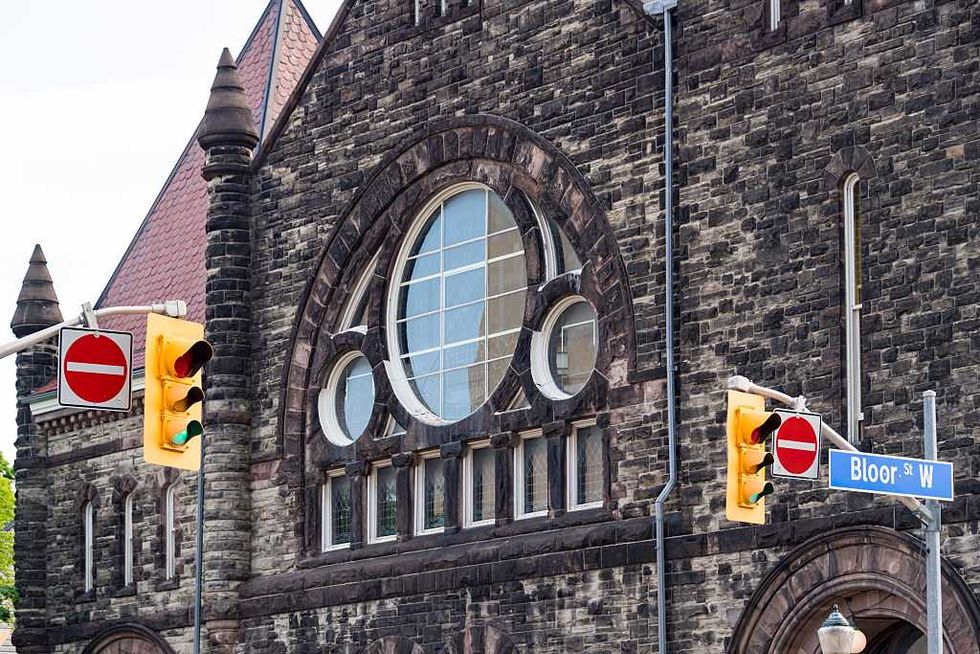
Bloor Street United Church was first built in 1889 and survived a fire in 1954.
Getty Images
That was nearly the case for Bloor Street United: the numbers made sense, but it still took a decade to hammer out the details. One option was selling all of the land to a senior’s home or university dorm, then signing a land lease that would let the congregation maintain use of a portion of the property. But the committee members eventually concluded that residential development was the best bang for their buck. In exchange for a portion of land, they'd get a new worship space, plus rooms for Sunday school and meetings, an assembly hall, a kitchen, and 40,000 square feet of Class A office space, which they'll both use and rent out to other churches, including the United Church's own national offices.
It's a deal worth tens of millions, but the church isn't actually getting any cash upfront. Instead, the developer is paying for the land with the construction itself, building the church's new spaces as part of the same deal as the condo construction, and that work is worth $50 million. The parties arrived at that figure the same way Shamess says any land price gets set: work backwards from the project's total cost and the developer's expected profit margin, and what's left over is the church's 'payment.' Hilliard and his fellow congregants decided it was worth what they were giving up, especially with the new office space to bring in rental income well into the future.
Similar agreements have worked out for a number of churches around the country. In Vancouver, the historic First Baptist Church partnered with a developer to build a 57-storey luxury residential tower, complete with ‘vertical garden’ spaces and an Olympic-length pool. The church, meanwhile, kept much of its original structure, and also came away with a new 37-space daycare facility, rooms for meals, counselling, emergency care and shelter programs, seven storeys of affordable housing, a cafe, a gym, and landscaped playgrounds.
That’s another unusual thing about these deals: unlike most multi-million dollar real estate transactions, church redevelopments tend to return a significant chunk of their land’s value back to the community. One assessment from 2020 found that church congregations in Canada deliver a total of $18.2 billion annually in socioeconomic benefits to their surrounding communities, a phenomenon known as the ‘halo effect.’ Arm them with bigger and better spaces to work with, and those numbers (and the resulting benefits) will likely grow.
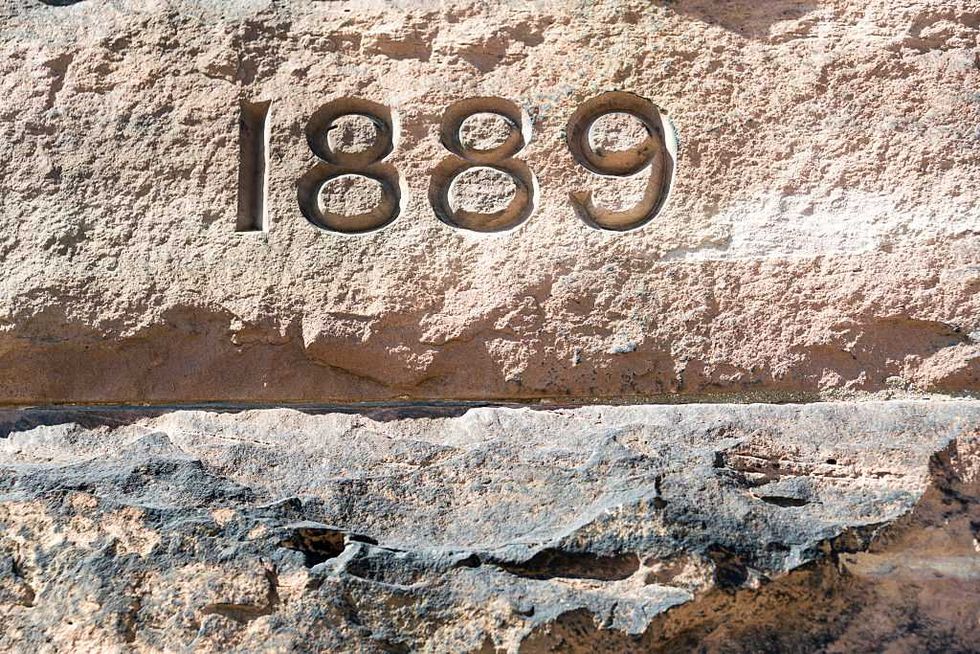
Bloor Street United's original outer wall.
Getty Images
Back on Bloor Street in Toronto, the redevelopment is nearly done. Above the old gothic church walls, a sleek glass tower stretches towards the heavens. “Our faith isn’t defined by bricks and mortar, but rather what we do in the building,” says Hilliard, whose congregation is preparing to move back into its new home. Asked if it's bittersweet, he replies, “You can hold two competing emotions in your head at the same time. Sadness at the memories. And excitement.”
On Hilliard's latest visit, power-washing had begun on the church façade’s ancient stones. All his life, Hilliard had known them as grey and sooty; now, washed for the first time in a century, they shone a beautiful granite pink.