
Michelin-starred restaurants come with a certain cultural cachet – and, usually, a price tag to match. But at Vancouver’s one-Michelin-starred Burdock & Co., where the tasting menu might run you $175 (before you factor in drinks, tax, or gratuity), the margins are a lot finer than you might think. Some months, the restaurant doesn’t even break even.
It all comes down to the cost of ingredients. Rather than ordering from the big corporate distributors that most restaurants rely on, Burdock & Co. chef and owner Andrea Carlson prioritizes small-scale, local organic growers and foragers wherever possible, for everything from squab to seaweed. The result is an ever-changing tasting menu that celebrates the vast terroir of British Columbia, and in doing so, reflects Carlson’s unique sensibility as an ingredient-first chef.
The numbers walk a razor-thin line, but that’s the only way to maintain a restaurant of the calibre that Carlson commands. Here’s how she breaks it down.
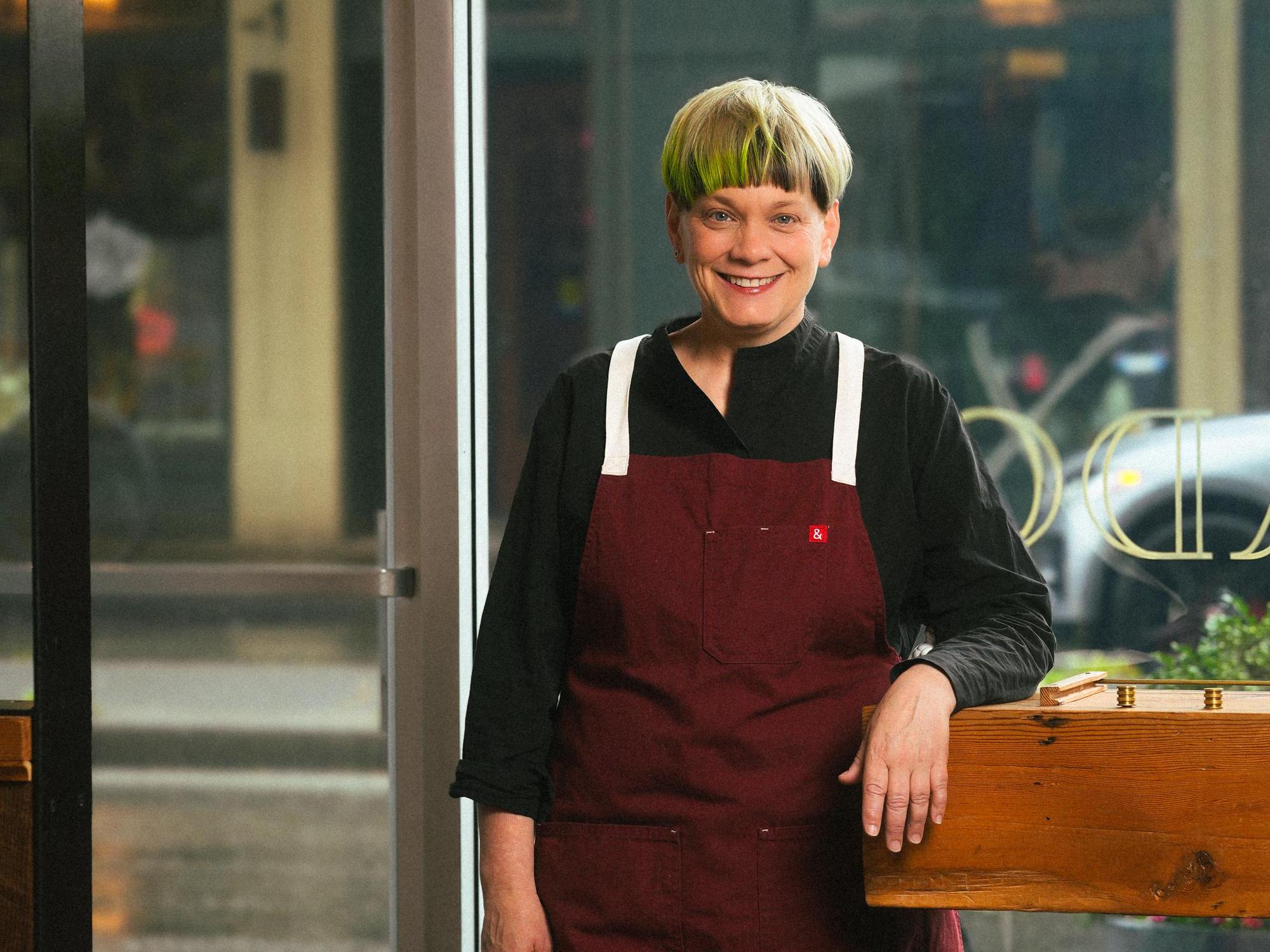
Andrea Carlson is the chef and owner of Burdock & Co.
Hakan Burcuoglu
Meet Andrea Carlson, chef and owner
Before opening Burdock & Co. with her partner Kevin Bismanis in 2013, Carlson cut her teeth at some of BC’s most exciting food establishments, including Star Anise, Bishop’s, and Sooke Harbour House. She dreamed up Burdock & Co. with a simple premise: taking some of the incredible ingredients she discovered through her work in other kitchens – especially the botanicals grown on site at Sooke Harbour House – and cooking them for the people instead of an exclusive fine-dining crowd.
“I just thought, ‘Man, I really want to have a place where everyone can have these fava tips or these pea tips,'” she says. The original intention was to have a more casual joint that served up share plates at a long, communal table. And that concept worked for a number of years – until Covid hit. All of a sudden, restaurants were collectively persona non grata, and a restaurant that focused on shared food was a complete non-starter. That prompted Carlson to reimagine the restaurant with a tasting menu format.
“No one could travel during the pandemic, so it was an opportunity to do some storytelling through a menu,” she says. “And people loved it.” Now Burdock & Co. almost exclusively serves a tasting menu, which changes with the seasons and often revolves around a particular ingredient – like resin or citrus, for example – that Carlson finds inspiring. The move was a fruitful one: the restaurant earned its Michelin star in 2022 and has retained it every year since.
How the money comes in
At the risk of stating the obvious, Burdock & Co. makes money by selling the food that Carlson cooks with her team. Almost all of the revenue – an estimated 95% – comes from the tasting menu and available add-ons (including wine pairings); the remaining 5% is made up mostly of à la carte items, which are only available for order at the bar, as well as gift card sales.
The restaurant typically sees a mix of both local and international guests – especially since the Michelin star, which solidified the restaurant’s reputation as a can’t-miss Vancouver experience. (Carlson actually says that the Michelin nod increased her sales by a jaw-dropping 70%, but adds that the world was just coming out of Covid at the time, which had skewed her numbers downwards compared to pre-pandemic levels.) These days, international visitors make up 60% of the restaurant’s customer base, while locals contribute the remaining 40%.
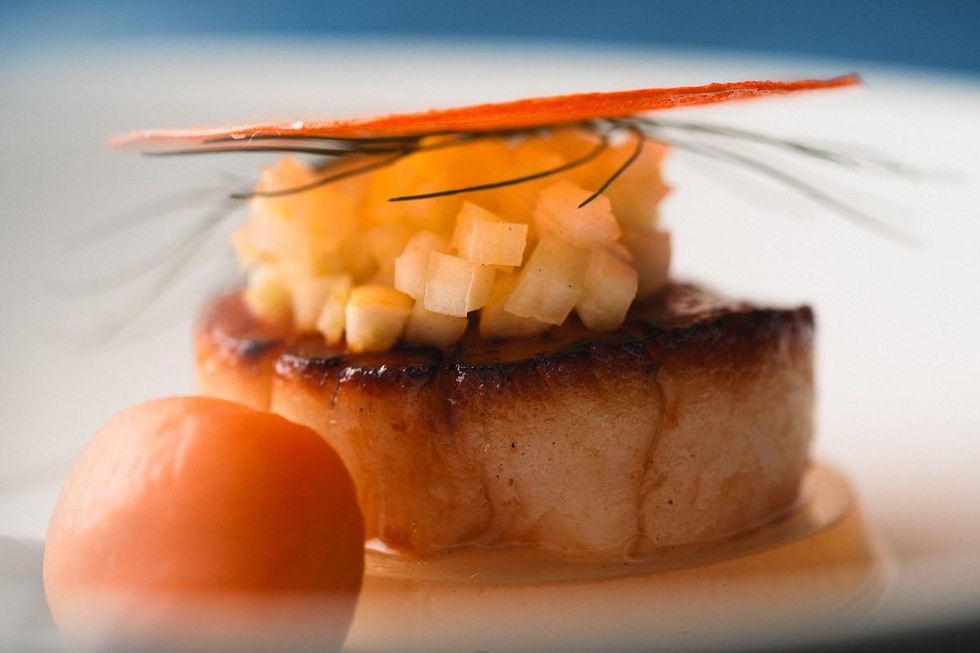
Burdock & Co.'s rosehip glazed scallop.
Hakan Burcuoglu
What it actually costs
An average month of expenses for Burdock & Co. is usually in the realm of $87,000 to $95,000. Food and beverage costs take up around 32% of that, and payroll is usually around 38%, which includes the extended health benefits that Burdock & Co. offers to its staff. The rest is made up of other expenses including building maintenance (repairs, pest control); supplies (kitchenware, barware, and dinnerware); building rent and insurance; marketing and photography; and external merchant fees (banks, credit cards).
"There are a lot of months when you lose, and then there are some months when you don't. And you just hope it all balances out."
Burdock & Co.'s food costs are, Carlson estimates, 10% higher than the average restaurant that sources conventional, non-organic ingredients. Take, for example, one pound of scallops. Carlson could choose to source frozen scallops that were harvested unsustainably, and with little to no information about their provenance or if the workers were treated fairly along the supply chain. Doing so would cost $30 per pound. Instead, Carlson purchases fresh, sustainably-sourced scallops from ethical fisheries. The price? A whopping $70 per pound.
Those numbers mean that whether the tasting menu alone covers costs comes down to volume: on busy months, it can; on slow ones, it can’t. Where Burdock & Co. is able to squeak out a profit is through add-ons, be it a premium wine pairing ($135) or menu additions (such as sake-marinated abalone for $29, or tater tots and caviar for $160).
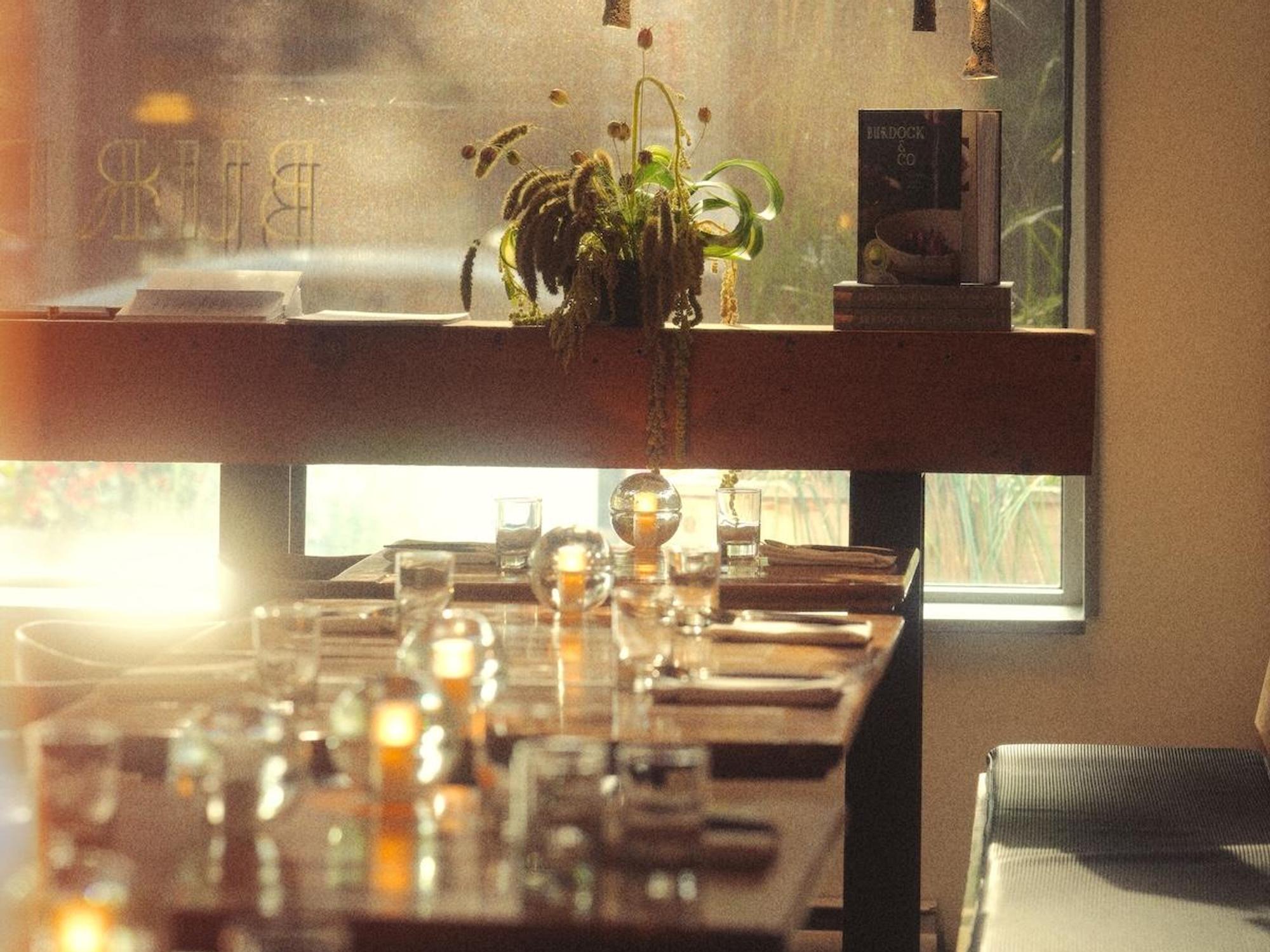
The dining room of Burdock & Co.
Hakan Burcuoglu
What's left over
Carlson doesn’t always break even. “There are a lot of months when you lose, and then there are some months when you don’t,” she says. “And you just hope it all balances out.”
When pricing out a new tasting menu, Carlson tries to keep the food costs between 25 to 30% of the total, which leaves about 30% for labour and 30% for admin and everything else. But in Burdock & Co.'s case, labour costs have gone up significantly since the restaurant began offering employee benefits, which means that her potential profit, instead of being in the 10% range, is really closer to 2%. And that’s only if everything goes well and the restaurant is booked through the month.
The Canadian context
Destination restaurants like Carlson’s have taken a big hit since the start of the United States’ trade war with Canada. Part of that is because Americans are travelling less to Canada, but Carlson says the bigger factor is consumer insecurity: people are simply reluctant to spend more money in recent years. Carlson has also seen a drop in local reservations, which she attributes to a general tightening of belts amidst a shaky economic landscape. All in all, she says she’s seen a 30% drop in business since the tariffs took effect. “It’s been ongoing for so long that it’s really becoming a bit of a strain,” she admits.
"There's a misconception that there's some kind of discounted pricing going on for restaurants, and it's not true."
Another factor affecting Burdock & Co.'s revenue is the drop in alcohol sales. Canadians are drinking less across the board, and restaurants are feeling it: in 2013, alcohol contributed to an average of 21.1% of total revenues at full-service restaurants; in 2023 (which has the most recent available data), that number dropped to 17.1%. Carlson says Burdock & Co.'s alcohol sales are down 20%, which gives the restaurant even less wiggle room. Swapping in mocktails doesn’t solve the problem, either – the produce and teas behind her juices and tinctures cost more than they used to, and they’re labour-intensive to make.

Burdock & Co.'s black garlic and blue cheese nougat.
Hakan Burcuoglu
The thing that most people get wrong
Buying from small, local, organic producers isn’t cheap – there’s no bulk discount (or industry discount, for that matter). “All of the organic farmers that we buy from, we pay the same price as you pay at the farmer’s market,” Carlson explains. “I think there’s a misconception that there’s some kind of discounted pricing going on for restaurants, and it’s not true.”
For example, an organic salad mix that she frequently serves costs $65 per kilo – and the restaurant goes through one or two a week. A pound of strawberries goes for upwards of $10 per pound.
Even if it hurts her bottom line, though, Carlson understands why the farmers price their goods this way. “Just as we’re committed to having a sustainable system around paying staff fairly, it’s the same for them and for the pressures on farmers around the cost of land and labour,” she says. “That is what they need to charge, so for them to then discount it to us doesn’t make any sense.” People love to complain about farmers’ market prices, but Carlson has to pay them too, just like everyone else.
The bottom line
It would certainly be easier (and cheaper!) for Carlson to source her ingredients from lower-quality avenues. But that wouldn’t be true to who she is as a chef. “This business is about supporting local food security,” she says. “That is our driving mandate.”
If the numbers ever stopped making sense, she wouldn’t change the way she does things – she’d simply stop altogether. “If we had to switch to a system where we were purchasing pre-made, frozen food from a giant retailer, we just wouldn’t do it,” says Carlson. “I wouldn’t be in food anymore because that’s just not how I want to move through the world. I’m so committed to this beautiful produce and all of these things that we have that our local farmers are growing. That is what we want to showcase. That’s what we’re here for.”
Spending $175 on dinner might not be something you can afford to do very often, but if you do get the opportunity to eat at Burdock & Co., you won’t just be enjoying a fancy meal – you’ll also be supporting a whole supply chain of local growers and producers.